Tax & Finance
August 11, 2026 · Marc Cormier
Maryland Estate Tax vs. Inheritance Tax: What Heirs Need to Know
Published August 2026 · Updated August 2026
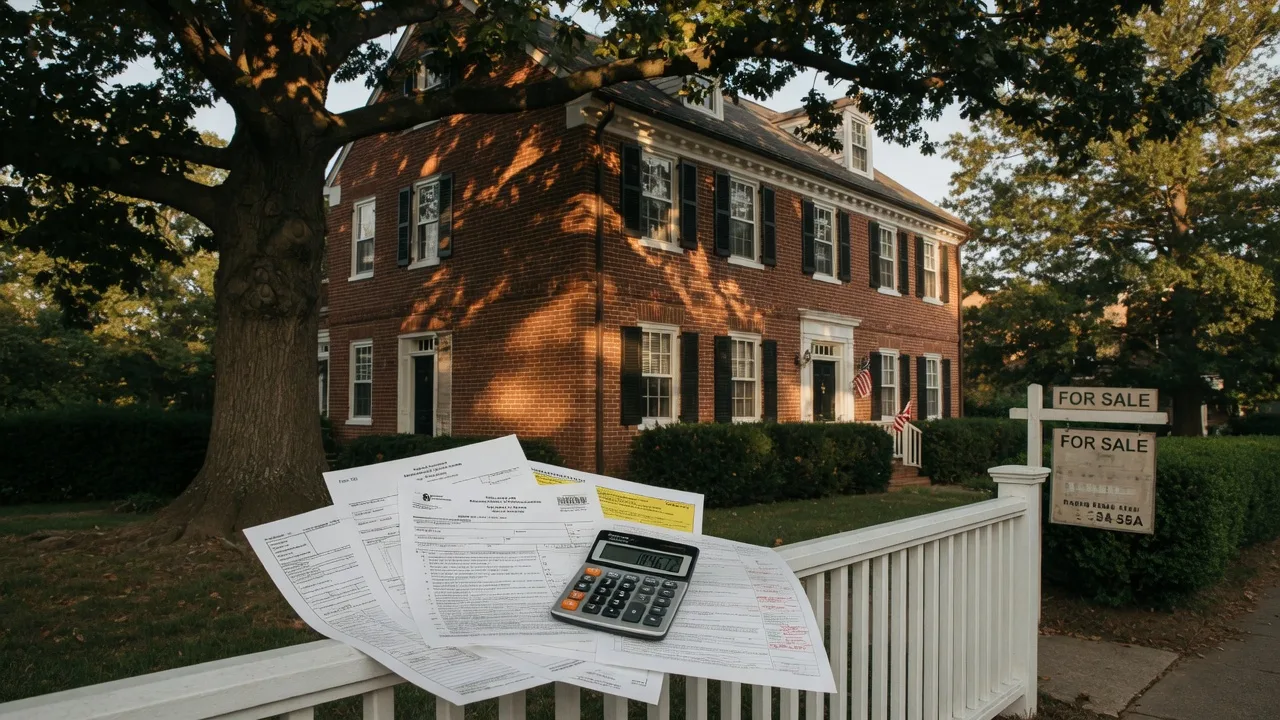
If you've inherited a home or other assets in Maryland, you may be wondering whether you owe taxes. The answer depends on two different taxes that many people confuse: the Maryland estate tax and the Maryland inheritance tax.
Maryland is one of only a handful of states that impose both. Understanding the difference can save you from unnecessary worry, or help you plan for a tax bill you didn't expect.
The Short Version
Estate tax is paid by the estate itself before assets are distributed to heirs. It only applies to estates valued above a certain threshold.
Inheritance tax is paid by the person receiving the inheritance. It applies to certain types of property passing to certain types of people.
Most families selling an inherited home in Maryland never pay either tax. But you need to know the rules to be sure.
Maryland Estate Tax
What it is
The Maryland estate tax is a tax on the total value of a deceased person's estate. It is paid by the estate, not by the individual heirs, before any distributions are made.
Who pays it
The estate pays. If the estate doesn't have enough cash, assets may need to be sold to cover the tax. This includes real estate.
When it applies
The Maryland estate tax applies to estates with a gross value exceeding $5 million for deaths occurring in 2019 or later. This threshold is per person, not per couple.
How it works
If the deceased person's total estate, including real estate, bank accounts, investments, retirement accounts, life insurance, and personal property, exceeds $5 million, the excess is taxed.
Maryland uses a graduated rate structure, with rates ranging from about 16% on smaller amounts to as high as 32% on very large estates. However, there is a unified credit that effectively exempts the first $5 million from taxation.
What this means for you
If you inherited a home in Montgomery County worth $800,000, and the total estate is worth $2 million, the estate is below the $5 million threshold. No estate tax is owed.
If the total estate is worth $7 million, the excess $2 million above the threshold may be subject to estate tax. But this is paid by the estate before you receive your inheritance, not out of your pocket.
The federal estate tax
There is also a federal estate tax, but it has a much higher exemption, $13.61 million per person in 2024. Very few estates owe federal estate tax. Maryland's $5 million threshold is the one that matters for most families.
Maryland Inheritance Tax
What it is
The Maryland inheritance tax is a tax on the value of property received by an heir. Unlike the estate tax, this is paid by the person receiving the inheritance.
Who pays it
The heir pays, not the estate.
When it applies
The inheritance tax applies when property passes to someone who is not a lineal relative of the deceased. The tax rate is 10% of the value of the property received.
Who is exempt
Maryland exempts the following categories of heirs from inheritance tax:
- Surviving spouses
- Children (including adopted children)
- Grandchildren
- Parents
- Grandparents
- Siblings
If you inherited your parent's home in Silver Spring, you are exempt. If you inherited from a grandchild, you are exempt. If you inherited from a sibling, you are exempt.
Who owes it
The inheritance tax applies when property passes to:
- Nieces and nephews
- Aunts and uncles
- Cousins
- Friends
- Unrelated individuals
- Stepchildren (in some cases, depending on the relationship)
If your aunt left you her home in Annapolis, and you are not her child, grandchild, sibling, or spouse, the 10% inheritance tax may apply to the value of that home.
Important nuances
The inheritance tax applies to certain types of property, not all transfers. Real property (real estate) is generally subject to the inheritance tax when it passes to a non-exempt heir.
However, property passing through a will, trust, or beneficiary designation to a non-exempt person may trigger the tax. Property held in joint tenancy with rights of survivorship may not trigger the tax in the same way.
This is an area where the specific facts matter enormously. Talk to a Maryland probate attorney about your situation.
The Key Difference: Who Pays
This is where most people get confused.
Estate tax: The estate pays. It comes out of the total value of the estate before anything is distributed to heirs. If you're an heir, you never write a check for estate tax. Your inheritance may be smaller because the estate paid the tax, but you don't pay it directly.
Inheritance tax: The heir pays. If you receive property that's subject to the inheritance tax, you owe 10% on the value of that property. This is a direct cost to you.
For most families selling an inherited home, the inheritance tax is the one to watch, because real estate passing to a non-lineal heir can trigger it.
Does the Inheritance Tax Apply to Real Estate?
Yes. Real property is one of the asset types subject to Maryland inheritance tax when it passes to a non-exempt heir.
Example: Your uncle dies and leaves you his home in Bowie, Maryland, worth $400,000. You are his nephew. As a nephew, you are not in the exempt category. The inheritance tax would be 10% of $400,000, that's $40,000, unless an exemption applies.
However, if your uncle left the same home to his daughter (your cousin), she would be exempt as a lineal descendant.
Ways to reduce or eliminate the inheritance tax
There are some strategies that may reduce or eliminate the inheritance tax:
- Outright gifts during life: If the property was gifted to the heir before death, the inheritance tax may not apply. However, this creates other tax and legal considerations.
- Trust structures: Certain trust arrangements can help minimize inheritance tax exposure.
- Life estate deeds: In some cases, a life estate deed can help property pass outside the inheritance tax.
- Joint tenancy: Property held in joint tenancy with rights of survivorship may pass without inheritance tax, depending on the circumstances.
These strategies require careful planning with an estate attorney. They are not DIY solutions.
What If You're Selling the Inherited Home?
If you inherited a home and are selling it, here's how the taxes interact:
Estate tax
If the total estate is below $5 million, no estate tax is owed. If it exceeds $5 million, the estate pays the tax before distributing assets. The home itself may need to be sold to cover the tax if the estate lacks liquid funds.
Inheritance tax
If you're a lineal heir (child, grandchild, sibling, spouse), you don't pay inheritance tax on the home. If you're a non-lineal heir (niece, nephew, friend), you may owe 10% on the value of the home.
Capital gains tax
When you sell the home, you may owe capital gains tax on any appreciation after the date of death. But thanks to the stepped-up basis rule, the home's cost basis resets to its fair market value at the time of death.
Example: Your parents bought their home in Potomac for $150,000. It's worth $900,000 when they pass away. Your cost basis becomes $900,000. If you sell it for $920,000, you only owe capital gains tax on the $20,000 of appreciation after their death, not the $750,000 of appreciation during their lifetime.
If you sell quickly (within a few months of death), the gain is often minimal or zero.
For a deeper look at tax questions when inheriting a home, read Will I Owe Taxes When I Inherit or Sell a House in Maryland?
Common Questions
Do I owe inheritance tax if I sell the inherited home?
Yes, if the property was subject to inheritance tax, selling it doesn't eliminate the tax. The tax applies to the value of the property you received, not whether you keep or sell it.
Does the estate pay the inheritance tax?
No. The inheritance tax is the heir's responsibility. The estate pays the estate tax, but the heir pays the inheritance tax.
Can the estate advance money to pay the inheritance tax?
In some cases, yes. If the estate has liquid funds, the personal representative may be able to advance money to cover the inheritance tax, which would then be deducted from your share of the estate. This is something to work out with the estate attorney.
What if the home has a mortgage?
The inheritance tax is calculated on the gross value of the property, not the net equity. If the home is worth $500,000 and has a $300,000 mortgage, the inheritance tax is based on $500,000, not $200,000.
Is there a way to avoid the inheritance tax?
For lineal heirs, there's no inheritance tax to avoid. For non-lineal heirs, strategies like gifting, trusts, and joint tenancy may help, but they require professional planning.
Do I need a probate attorney for tax questions?
Absolutely. Tax law is complex, and Maryland's dual tax system adds layers of complexity. A probate attorney and a CPA or tax professional can help you understand your specific obligations.
What This Means for Families Selling Probate Property
Most families selling an inherited home in Maryland will not owe estate tax (the estate is below $5 million) and will not owe inheritance tax (the heirs are lineal relatives).
But "most" isn't "all."
If the estate is large, if the heirs include non-lineal relatives, or if the property has appreciated significantly since the date of death, there may be tax consequences.
The best advice is simple: get professional guidance early. Don't guess. Don't assume. And don't let tax anxiety stop you from making informed decisions about the property.
For region-specific guidance, explore our guides on probate sales in Montgomery County, Maryland and probate sales in Prince George's County, Maryland.
Learn more about selling a probate house and who covers the legal side in our guide Who Pays for Probate Attorney in Maryland.
Use our Probate Cost Calculator to estimate overall estate costs.
Selling an Inherited Home in Maryland?
If you're dealing with an inherited property and have questions about taxes, probate, or your selling options, I'm happy to help with the real estate side of the decision.
We can look at the property's current value, its potential market value, and the estimated net to the estate after costs and taxes.
Schedule a No-Obligation Consultation
Get clarity on your inherited property's value, tax considerations, and selling options.
Schedule a ConsultationSchedule a no-obligation call: https://calendly.com/cormier/new-meeting
Legal Note
Consult your CPA or tax advisor regarding the tax consequences of your specific situation.