Senior Living & Downsizing
August 6, 2026 · Marc Cormier
55+ Communities in Montgomery County: A Comparison Guide
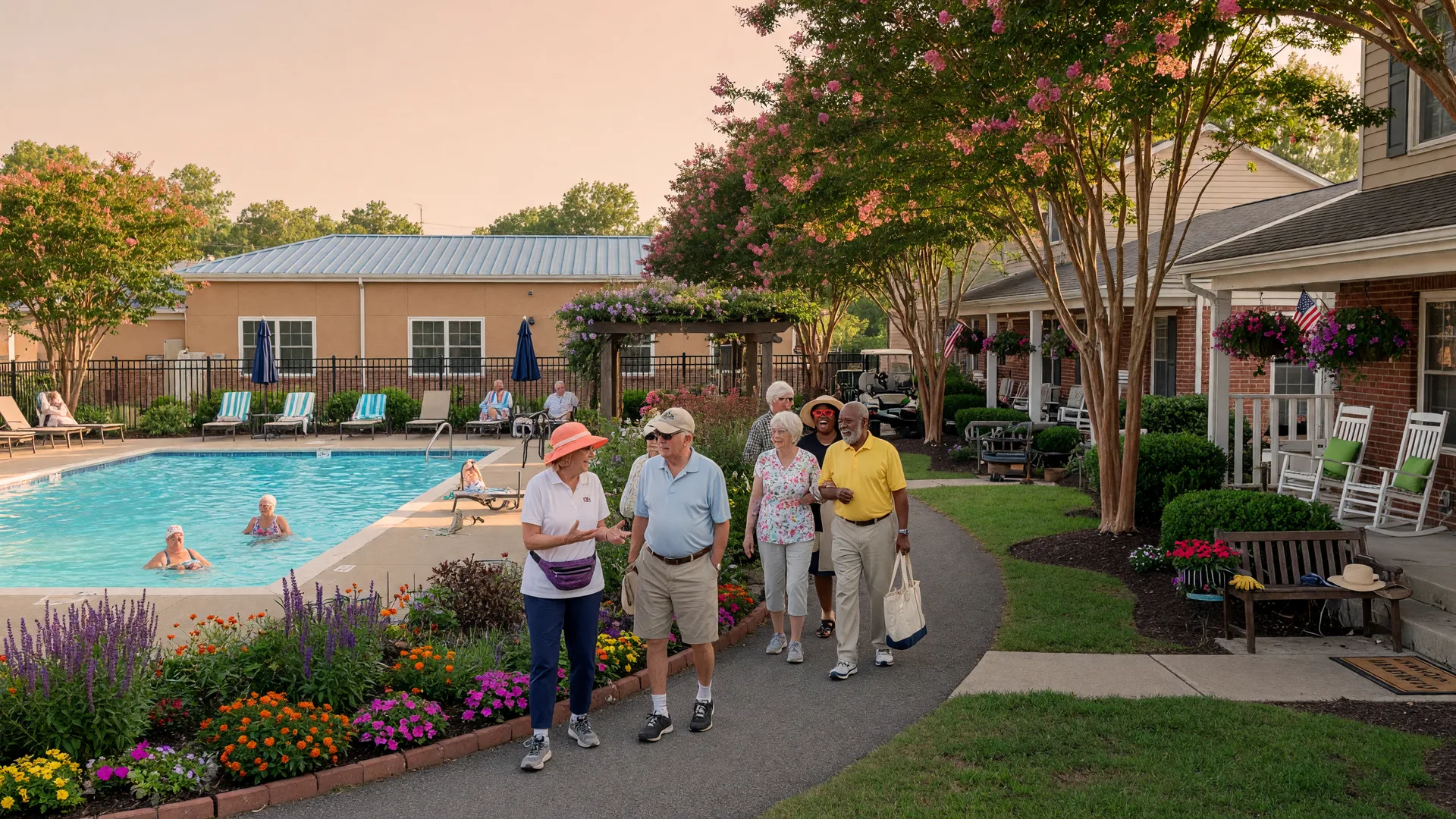
If you are exploring 55+ communities in Montgomery County, you are looking at one of the strongest active adult housing markets in the Mid-Atlantic. Montgomery County has more than a dozen dedicated age-restricted communities, each with its own mix of amenities, pricing, and lifestyle. The question is not whether you should move to a 55+ community, but which one fits how you actually want to live.
This guide compares the major 55+ communities in Montgomery County, covering what they offer, what they cost, and how to decide which one is right for your next chapter.
What 55+ Communities Offer
55+ communities, also called active adult communities, are age-restricted neighborhoods designed for residents aged 55 and older. They typically offer maintenance-free living, social activities, and amenities that make it easier to enjoy retirement without the burdens of a single-family home.
The key features that set 55+ communities apart include:
- Age restriction (55+): At least one resident must be 55 or older. Some communities allow younger spouses or partners.
- Low-maintenance living: Exterior maintenance, lawn care, snow removal, and trash pickup are handled by the association.
- Community amenities: Clubhouses, fitness centers, pools, tennis/pickleball courts, walking trails, and social rooms.
- Social programming: Organized activities, clubs, classes, and events designed for active adults.
- Security and convenience: Gated entries, on-site management, and proximity to shopping and medical care.
For homeowners looking to downsize from a family home, these communities offer a way to free up equity while maintaining or even improving quality of life.
Popular Montgomery County 55+ Communities
Montgomery County has several well-established 55+ communities. Here is a look at the most prominent ones and what each offers.
Leisure World of Maryland (Silver Spring)
Leisure World is the largest and best-known 55+ community in Montgomery County, with over 5,500 homes spread across more than 600 acres in Silver Spring. It is a gated, full-service community with its own medical center, pharmacy, bank, post office, and three clubhouses. Leisure World has been around since the 1960s and offers a wide range of housing types from co-op apartments to single-family homes.
The community includes two swimming pools, golf course, tennis and pickleball courts, a woodshop, art studio, library, and more than 200 social clubs and activities. The location near Route 29, the ICC, and I-95 puts it within easy reach of Washington DC and Baltimore.
Pricing ranges widely depending on the housing type. Co-op apartments may start in the $100,000 to $200,000 range with monthly fees covering utilities, taxes, and amenities. Single-family homes and townhouses can range from $300,000 to over $600,000.
The Village at Rossmoor (Gaithersburg)
Rossmoor is another long-established 55+ community in Gaithersburg, with roughly 3,000 homes. It offers a similar full-service model with a clubhouse, pool, tennis courts, walking trails, and organized activities. The community is located near Route 124 and Goshen Road, convenient to shopping at Kentlands and Rio centers.
Housing types include single-family homes, townhouses, and condominiums. Prices generally range from the low $200,000s for condos to over $500,000 for single-family homes. Monthly HOA fees vary but typically cover exterior maintenance, grounds care, and access to amenities.
Asbury Methodist Village (Gaithersburg)
Asbury Methodist Village is a continuing care retirement community (CCRC) that also offers independent living for 55+ residents. It sits on 130 acres in Gaithersburg and offers a continuum of care from independent living to assisted living and skilled nursing. This makes it an attractive option for those who want to age in place without moving again.
The community includes a fitness center, indoor pool, art studio, library, chapel, and multiple dining venues. Entry fees for independent living typically start in the $200,000 to $400,000 range plus monthly service fees.
Holiday Park (Wheaton / Silver Spring)
Holiday Park is a smaller, more affordable 55+ community in the Wheaton area. It offers condominium and townhouse living with a clubhouse, pool, and social activities. Prices tend to be more moderate, with condos starting around $150,000 to $250,000.
Other Notable Communities
Several other 55+ communities serve Montgomery County, including:
- Battery Park (Bethesda): A mid-rise condo community near downtown Bethesda with a mix of ages but a strong 55+ presence.
- Concord Village (Wheaton): A townhouse community near parks and shopping.
- Country Place (Silver Spring): Condos and townhomes in a quiet setting near Sligo Creek.
- Marsh Manor (Gaithersburg): A smaller community with detached homes near Lakeforest.
Amenities Comparison
The amenities offered by 55+ communities vary significantly. Here is how they typically compare across the major communities:
Pools and Fitness
Leisure World offers two outdoor pools plus a fitness center with exercise classes. Rossmoor has an outdoor pool and fitness facilities. Asbury Methodist Village has an indoor pool and a full fitness and wellness center. Holiday Park has a seasonal outdoor pool.
Social and Club Activities
Leisure World leads with over 200 clubs and activities covering everything from woodworking to bridge to water aerobics. Rossmoor and Asbury also have robust programming with clubs, classes, and regular social events. Holiday Park offers a more modest schedule of activities.
Medical and Health Services
Asbury Methodist Village stands apart with on-site health services including assisted living and skilled nursing. Leisure World has an on-campus medical center with primary care and pharmacy services. Rossmoor and Holiday Park are near hospitals and medical centers but do not have on-site medical care.
Transportation and Location
Leisure World provides a community shuttle for residents. Rossmoor offers limited transportation. Asbury Methodist Village provides transportation to medical appointments and shopping. Proximity to Metro, bus routes, and major roads varies by community, with Leisure World and Rossmoor generally requiring a car for most errands.
Pricing Ranges
Pricing in 55+ communities depends on housing type, size, location, and whether it is a cooperative or fee-simple ownership. Here are general ranges:
Montgomery County 55+ Pricing Overview
| Community | Type | Typical Price Range |
|---|---|---|
| Leisure World | Co-ops / SFH | $100K – $600K+ |
| Rossmoor | Condos / SFH | $200K – $500K+ |
| Asbury Methodist | CCRC entry fee | $200K – $400K+ |
| Holiday Park | Condos | $150K – $250K |
Prices are approximate as of 2026 and vary by unit size, condition, and market conditions.
HOA Fees and What They Cover
Monthly HOA or co-op fees in 55+ communities typically range from $300 to over $1,000 per month, depending on the community and housing type. Understanding what these fees cover is essential to comparing total housing costs.
What is typically included:
- Exterior maintenance (roof, siding, paint, gutters)
- Lawn care, landscaping, and snow removal
- Trash and recycling pickup
- Access to community amenities (pool, fitness, clubhouse)
- Water, sewer, and sometimes basic cable
- Community security and common area upkeep
- Reserve fund contributions for major repairs
In co-op communities like Leisure World, the monthly fee may also include real estate taxes and a portion of the property insurance. This can simplify budgeting significantly, since many of the variable costs of homeownership are bundled into one payment.
Renting vs. Buying in a 55+ Community
Not every 55+ community requires you to buy. Several communities offer rental options, either through the association or through individual homeowners who lease out their units. Here is how renting compares to buying:
Buying
Buying gives you equity, predictable monthly costs (especially in a co-op where taxes are included), and the freedom to customize your home. It also means you benefit from any future appreciation. The downside is the upfront capital required and the responsibility of reselling when you eventually move.
Renting
Renting requires less upfront cash and gives you flexibility to move without the hassle of selling. It is a good option if you are not sure the community is the right long-term fit, or if you want to preserve your capital for other needs. The tradeoff is that rent can increase over time and you do not build equity.
For homeowners who are ready to downsize but not sure about a purchase, renting for the first year can be a smart way to test the lifestyle before committing.
How to Decide If a 55+ Community Is Right for You
Making the move to a 55+ community is a personal decision. Here are the key questions to ask yourself:
- Do you want less maintenance? If you are spending weekends on yard work and home repairs instead of doing things you enjoy, a 55+ community can free up significant time and energy.
- Are you looking for social connection? Many 55+ communities have active social calendars. If you want to meet people and stay engaged, the built-in community can be a major benefit.
- Can you afford the monthly fees? The purchase price is only half the equation. Monthly fees are the ongoing cost of the lifestyle, and they can increase over time.
- Do you need proximity to family or medical care? Location matters. Make sure the community is near the people and services you need.
- Are you ready to downsize? Moving from a family home to a smaller residence requires letting go of belongings. If you are not ready mentally, the transition can feel harder than it needs to be.
As a Seniors Real Estate Specialist (SRES), I work with homeowners every week who are exploring these decisions. The key is to visit multiple communities, talk to current residents, and run the numbers on total monthly costs before you decide.
Frequently Asked Questions
Can I have guests under 55 stay overnight in a 55+ community?
Yes. Most 55+ communities allow guests of any age to stay overnight for limited periods. The age restriction applies to permanent residents, not visitors. Check the specific community's guest policy, since rules vary.
Can my spouse live with me if they are under 55?
Yes, in most communities. The federal Housing for Older Persons Act allows an exception for a spouse who is under 55, as long as at least one resident meets the age requirement. Some communities also allow a younger caregiver to live with a resident if needed.
Are the HOA fees worth it?
It depends on your situation. If you add up what you currently spend on lawn care, exterior maintenance, utilities, insurance, and home repairs, the HOA fee often covers many costs you are already paying. For many residents, the convenience and predictability are the main value.
What if I need to move out for health reasons?
In a standard 55+ community, you would sell your home. In a CCRC like Asbury Methodist Village, you can transition to assisted living or skilled nursing within the same campus. If health is a concern, a CCRC model may offer more long-term security.
Can I still garden or have pets?
Most communities allow pets, though there may be size or breed restrictions. Gardening rules vary. Some communities have community garden plots, while others prohibit personal landscaping to maintain uniform grounds. Check each community's pet and garden policies.
Do I have to sell my current home before I can buy in a 55+ community?
Not always. Some communities will accept a contingent offer, but a cash offer or a sale with no home-sale contingency is often more competitive. If you need to sell first, work with an agent who can coordinate the timing of both transactions.
How do 55+ communities handle property taxes?
In a fee-simple community, you pay property taxes directly. In a co-op like Leisure World, property taxes are included in your monthly fee. Maryland offers various tax credits for seniors, including the Homestead Tax Credit and a senior tax credit for homeowners with limited income.
What is the difference between a 55+ community and a CCRC?
A 55+ community is strictly age-restricted housing with amenities. A continuing care retirement community (CCRC) offers a full continuum of care from independent living to assisted living and skilled nursing on the same campus. CCRCs charge higher entry fees and monthly costs but provide lifetime care.
Ready to Explore Your Options?
As a Seniors Real Estate Specialist (SRES) and Certified Luxury Home Marketing Specialist (CLHMS), I have helped dozens of Montgomery County homeowners transition into 55+ communities. I know the communities, the pricing, and the process of selling your current home and buying your next one.
Whether you are just starting to explore or ready to make a move, I can help you understand your options without pressure.
Schedule a Free Consultation
Let's talk about what you are looking for, compare communities, and make a plan that fits your timeline and budget. No obligation, just real answers.
Book Your ConsultationLegal Note
Pricing and availability in 55+ communities change frequently. Verify current pricing, HOA fees, and availability directly with the community. This guide provides general comparisons, not specific pricing guarantees.