Ultimate Guide
August 2, 2026 · Marc Cormier
Should You Keep or Sell an Inherited House in Maryland?

Quick Answer
The decision to keep or sell an inherited house is one of the most personal and financial choices a family will make. There isn't one right answer. The best decision is the one that fits the family's goals, financial situation, and responsibilities while protecting the estate. Evaluating every option before deciding ensures you make an informed choice.
Table of Contents
- Living in the Home
- Renting the Property
- Selling Immediately
- Waiting to Sell
- Family Buyouts
- Capital Gains Basics
- Carrying Costs
- Insurance
- Maintenance
- Future Appreciation
- Emotional Considerations
- The Probate Value Analysis
- Net Proceeds
- Opportunity Cost
- Long-Term Planning
- Decision Matrix
- Maryland Case Study
- Common Mistakes
- Marc's Advice
- If This Were My Family
- FAQs
- Inherited Property Decision Worksheet
- Key Takeaways
- Next Steps
When a loved one passes away and leaves behind their home, the family inherits more than a house. They inherit a decision that affects their finances, their emotions, their relationships, and their future. Should they keep the home as a residence or an investment? Should they sell it right away? Should they wait? Should they rent it out? Should one sibling buy out the others?
There is no single right answer. The right answer depends entirely on the family's goals, financial situation, timeline, and what the property itself needs. This guide walks through every option, compares them honestly, and gives you a framework to make the decision that is right for your family.
If you are still early in the estate process, start with our Complete Guide to Probate or learn what probate real estate is to understand the legal framework first.
Living in the Home
One option is for a family member to move into the inherited home. This can make financial sense in certain situations, particularly when the person moving in would otherwise be paying rent or a mortgage elsewhere.
When keeping the home makes sense. You have a strong emotional connection to the property and want to raise your family in the same home where you grew up. The home is in a location that works for your job, your children's schools, and your lifestyle. The mortgage is paid off or the monthly payment is affordable. You have the financial resources to maintain the home, pay the taxes and insurance, and handle repairs as they come up. You and your siblings agree that one of you will live in the home and the others will be bought out over time.
When keeping the home is risky. You cannot afford the carrying costs, but you feel guilty about selling. The home needs major repairs that you cannot afford. The location does not fit your lifestyle or career. You have siblings who need their inheritance as cash, not as equity in a home they do not live in. You are making the decision out of guilt, not out of sound financial planning.
The numbers to run. If the home is worth $550,000 and the mortgage is paid off, living in the home means you are getting a $550,000 asset as your living space. But you are also taking on property taxes (typically 1% to 1.5% of the home's value annually in Maryland), homeowner's insurance, maintenance (budget 1% to 2% of the home's value per year), utilities, and any HOA fees. If you would otherwise pay $2,000 per month in rent, living in the inherited home saves you $24,000 per year in rent. If the carrying costs total $12,000 per year, you come out ahead by $12,000 annually.
For more on what happens when one heir wants to live in the property, read Can I Live in an Inherited House During Probate in Maryland? and What Happens If One Heir Lives in the Probate House Rent-Free?
Renting the Property
Renting out an inherited home can generate steady monthly income while the property appreciates over time. But being a landlord is not passive income. It is a second job that comes with responsibilities, risks, and costs.
When renting makes sense. The property is in good condition and ready to rent with minimal investment. The rental market in the area is strong, with low vacancy rates and rents that cover the carrying costs plus a reasonable return. You have the time and willingness to manage the property or the budget to hire a professional property manager (typically 8% to 12% of monthly rent). You and your siblings agree that the rental income will be shared according to each person's ownership interest.
When renting is not the right choice. The property needs significant repairs before it can be rented. The rental income would not cover the mortgage, taxes, insurance, and maintenance. You live far from the property and cannot manage it yourself. The emotional burden of renting out a parent's home feels wrong to you or your siblings. The estate needs to be settled and the proceeds distributed, and renting delays that distribution.
The numbers to run. A Maryland home worth $550,000 might rent for $2,500 to $3,200 per month depending on the area. Against that, subtract the mortgage payment (if any), property taxes ($550 to $700 per month), insurance ($100 to $200 per month), property management (8% to 12% of rent), maintenance reserves (10% of rent), and vacancy reserves (5% to 8% of rent). In a best-case scenario, you might net $500 to $1,000 per month in cash flow. In a tight market, you could break even or lose money.
For more context on the costs of holding property during probate, read Who Pays the Mortgage, Taxes, Insurance, Utilities, and HOA Fees During Probate?
Selling Immediately
Selling the inherited home is the most common choice, and for good reason. For many families, the proceeds from the sale provide financial stability, closure, and the ability to move forward. Selling also eliminates the ongoing costs and responsibilities of ownership.
When selling immediately makes sense. The estate needs cash to pay debts, taxes, or expenses. The heirs need their inheritance as cash rather than as an illiquid asset. No one in the family wants to live in the home. The carrying costs are draining the estate. The property needs significant repairs and no one has the resources or time to manage them. Multiple heirs need to be bought out and no one has the cash to do it.
When selling immediately may not be best. The market is in a temporary downturn and selling now would mean accepting a significantly lower price. The property has strong appreciation potential and you have the ability to wait. A family member wants to live in the home and can buy out the other heirs. The tax consequences of selling now are significantly worse than waiting.
The two selling paths. You can sell the property as-is to a cash buyer, which is faster and requires no repairs. Or you can list the property on the open market, which typically produces a higher sale price but takes longer and requires preparation. Our guide on Should You Sell the Probate House As-Is or Make Repairs First? walks through this comparison in detail.
Learn more about the selling process in Selling a Probate House: Complete Guide and How to Sell a Probate Property in Maryland. Once you decide to sell, compare your options in our selling guide.
Get an Instant Offer on Your Inherited Maryland Home
Compare as-is cash offers against the open market potential. See what your property is worth today, with no obligation. That single step protects you more than anything else you can do in this process.
Get Instant OfferWaiting to Sell
Sometimes the best decision is to wait. If the market is soft, if the property needs time to appreciate, or if the estate is not yet ready to sell, holding the property for a period of time before selling can make financial sense.
When waiting makes sense. You have a clear reason to believe the property will appreciate significantly in the near term. The estate can afford the carrying costs without hardship. A family member needs time to decide whether to buy out the other heirs. The legal process (probate, title issues, disputes) needs time to resolve before a sale is practical.
The risks of waiting. Carrying costs add up. Every month the property sits vacant, the estate pays taxes, insurance, utilities, and maintenance with no income. The property may deteriorate. Vacant homes are targets for vandalism, theft, and squatters. The longer the property sits, the harder it may be to sell. And if the market declines, the property could lose value while you wait.
For guidance on protecting a vacant inherited property, read How to Secure a Vacant Probate Home in Maryland and Dealing with Insurance on a Vacant Probate Property.
Family Buyouts
When one family member wants to keep the home and others want their share as cash, a buyout can be the solution. One or more heirs purchase the others' interests in the property. The home stays in the family, and the departing heirs get their inheritance in cash.
How buyouts work. The property must be appraised at its current fair market value. The buying heir(s) then pay the selling heir(s) their share of the equity. If the home is worth $550,000 and three siblings each have a one-third interest, a sibling who wants to keep the home would need to pay the other two siblings $366,667 total, or $183,333 each.
Common buyout challenges. The buying heir may not have enough cash or qualify for a mortgage to buy out the others. The selling heirs may feel the buyout price is too low. Disagreements about the home's value can create conflict. The buyout must be structured properly to avoid gift tax or other complications.
When families cannot agree on a buyout, the situation can become contentious. Read more in Can One Heir Force the Sale of an Inherited House in Maryland? and What Happens If Heirs Disagree About Selling the House?
Capital Gains Basics
One of the most important financial factors in the keep-or-sell decision is the capital gains tax treatment of inherited property. Understanding this can significantly affect your net proceeds and your decision.
The step-up in basis. When you inherit a home, you receive a step-up in basis to the property's fair market value on the date of the original owner's death. This means if the home was purchased for $100,000 in 1985 and is worth $550,000 when you inherit it, your tax basis is $550,000, not $100,000. If you sell the home for $550,000 shortly after inheriting it, you owe no capital gains tax.
The primary residence exclusion. If you live in the inherited home for at least two of the five years before selling it, you may qualify for the primary residence exclusion, which allows you to exclude up to $250,000 of gain ($500,000 for married couples filing jointly). This can significantly reduce or eliminate capital gains taxes if the property appreciates after you move in.
Rental property capital gains. If you rent the property instead of living in it, you lose the primary residence exclusion for the period it is rented. Any appreciation during the rental period will be subject to capital gains tax when you sell. However, you can deduct depreciation during the rental period, which offsets some of the tax impact.
For a deeper look at taxes on inherited property, read Will I Owe Taxes When I Inherit or Sell a House in Maryland?
Carrying Costs
Carrying costs are the monthly expenses of owning a property. These costs are a critical factor in the keep-or-sell decision because they determine how much it costs to hold the property each month.
For a typical Maryland home worth $500,000 to $600,000, monthly carrying costs look like this:
Typical Monthly Carrying Costs for a $550,000 Maryland Home
| Expense | Monthly Cost |
|---|---|
| Property taxes (1.1% of value) | $504 |
| Homeowner's insurance (vacant property) | $150 |
| Utilities (minimum to maintain) | $200 |
| Maintenance reserves | $200 |
| HOA fees (if applicable) | $100 |
| Total (without mortgage) | $1,154 |
If the property has a mortgage, add that monthly payment to the carrying costs. A $300,000 mortgage at 6.5% adds approximately $1,896 per month. Total carrying costs with a mortgage would be approximately $3,050 per month or $36,600 per year.
For a detailed breakdown, see Who Pays the Mortgage, Taxes, Insurance, Utilities, and HOA Fees During Probate?
Insurance
Insurance is one of the most overlooked costs in the keep-or-sell decision. Standard homeowner's insurance policies have vacancy clauses. If a property is vacant for more than 30 to 60 days, many policies limit or exclude coverage for certain types of damage.
Vacant property insurance. If you plan to hold the property without living in it, you need a vacant or unoccupied property insurance policy. These policies cost significantly more than standard homeowner's insurance, typically 2 to 3 times as much. They cover the specific risks of vacant properties: vandalism, theft, water damage, fire, and liability.
Rental property insurance. If you rent the property, you need landlord insurance, which covers the structure, your liability as a landlord, and loss of rental income if the property becomes uninhabitable. This is different from a standard homeowner's policy.
Liability exposure. If someone is injured on the property, whether it is vacant, occupied, or rented, you could be held liable. Adequate liability coverage is essential regardless of which option you choose.
Read more in Dealing with Insurance on a Vacant Probate Property and Verifying Property Insurance and Notifying Insurers of Vacancies.
Maintenance
Every home requires maintenance. An inherited home that has been occupied by an elderly owner may have years of deferred maintenance. Budgeting for maintenance is essential regardless of whether you keep, rent, or sell the property.
Budget 1% to 2% of the home's value per year for maintenance. For a $550,000 home, that is $5,500 to $11,000 per year, or $458 to $917 per month. This covers routine maintenance like HVAC servicing, roof repairs, painting, landscaping, and plumbing.
Deferred maintenance is more expensive. If the inherited home has not been well maintained, the first year of ownership could cost significantly more. A new roof could cost $8,000 to $15,000. An HVAC replacement could cost $5,000 to $10,000. Updated electrical or plumbing could cost thousands more.
For guidance on which repairs make financial sense, read What Repairs Give the Best Return on Investment Before Selling a Probate House in Maryland? and Should I Renovate an Inherited House Before Selling It in Maryland?
Future Appreciation
One argument for keeping an inherited home is that it will appreciate over time. Real estate in Maryland has historically appreciated at an average of 3% to 5% per year. But past performance does not guarantee future results, and appreciation varies significantly by location, property type, and market conditions.
Run the numbers. If the home is worth $550,000 today and appreciates at 4% per year, it will be worth $669,000 in five years. That is $119,000 in appreciation, or approximately $23,800 per year. But subtract the carrying costs of approximately $13,848 per year (without a mortgage), and the net gain from appreciation is approximately $9,952 per year. If there is a mortgage, the carrying costs eat up the appreciation entirely or more.
Compare appreciation to investment returns. If you sell the home today and net $520,000 after costs, that money could be invested. At a 7% annual return in a diversified portfolio, that $520,000 would grow to $729,000 in five years. That is $209,000 in investment growth, compared to $119,000 in home appreciation. And the investment portfolio requires no maintenance, no insurance premiums, and no landlord responsibilities.
The point is not that selling is always better than keeping. The point is that you need to compare the financial outcomes honestly, including all the costs and all the alternatives.
Emotional Considerations
The keep-or-sell decision is never purely financial. It is deeply emotional. The inherited home holds memories of the person who lived there. It represents family history, tradition, and connection. Selling it can feel like losing that person all over again.
Guilt is not a financial plan. Many families keep an inherited home because they feel guilty about selling it. They worry that selling means they did not value the person who left it to them. This guilt can lead to keeping a property that drains the family's finances for years. Your loved one left you the home to improve your life, not to burden it.
Grief and decision-making. Making major financial decisions while grieving is difficult. The first year after a loss is emotionally charged. Give yourself time and space to think clearly. Talk to trusted advisors. Talk to your siblings. And do not rush into a decision you will regret.
Family dynamics matter. When multiple siblings inherit a home together, the decision affects everyone. One sibling may want to keep the home for sentimental reasons. Another may need their inheritance as cash to buy a home of their own. Finding a solution that respects everyone's needs is difficult but essential.
For more on navigating these complex family dynamics, read What Happens If Heirs Disagree About Selling the House?
Remember This
The person who left you the home wanted to help you, not to burden you. Making the best financial decision for yourself and your family honors their intent, even if that decision means selling the home.
The Probate Value Analysis
Before you can make an informed keep-or-sell decision, you need to know what the property is actually worth. Not a Zestimate. Not a tax assessment. A real, professional valuation that considers the property's condition, market position, and potential.
The Probate Value Analysis gives you eight essential data points: current as-is value, estimated value after improvements, suggested repairs, staging recommendations, traditional market value, multiple cash offers, estimated net proceeds, and a recommended selling strategy. With these eight data points, you can compare every option side by side and make a decision with confidence.
Read more about how to value inherited property in How Much Is My Inherited House Worth in Maryland? and How to Value a House for Probate Purposes.
Net Proceeds
Your net proceeds from selling an inherited home are the sale price minus all costs: real estate commission (typically 5% to 6%), closing costs (2% to 3% of the sale price), any mortgage payoff, any repair costs you incur before selling, and any carrying costs during the sale process. For a $550,000 sale, net proceeds typically range from $490,000 to $510,000 depending on the specific costs.
Knowing your net proceeds is essential for comparing the sell option against the keep or rent options. If selling produces $500,000 in net proceeds, and that money can be invested at 7% per year, the financial outcome of selling is $35,000 per year in investment returns, plus the elimination of all carrying costs.
For a full walkthrough of the selling costs, read How to Price a Probate House in Maryland and Probate Closing Timeline in Maryland.
Opportunity Cost
Every decision has an opportunity cost: the value of the next best alternative you did not choose. If you keep the home and live in it, you forgo the investment returns you could have earned by selling and investing the proceeds. If you sell the home, you forgo the potential appreciation and rental income.
Calculating opportunity cost helps you compare options honestly. If keeping the home produces $10,000 per year in imputed rent savings plus $22,000 per year in appreciation (4% on $550,000), the total return is $32,000 per year. If selling produces $500,000 in net proceeds invested at 7%, the return is $35,000 per year. The selling option produces $3,000 more per year, with less risk and no responsibilities.
The opportunity cost calculation is different for every family. Your tax situation, your risk tolerance, your timeline, and your personal goals all affect the comparison.
Long-Term Planning
The keep-or-sell decision should fit into your larger financial plan, not exist in isolation. How does keeping the home affect your retirement savings? Your children's education funding? Your ability to take career risks? Your estate plan for your own heirs?
Consider your life stage. A young family with growing income may benefit from keeping a paid-off home as a wealth-building asset. A retiree may need the liquidity that selling provides. Someone in a career transition may value the flexibility of cash over the responsibility of a property.
Diversification matters. Having too much of your net worth tied up in a single property is risky. If the home represents 40% or more of your total assets, selling and diversifying across a mix of investments may be the wiser financial choice.
Your heirs may not want it. If you keep the home and it passes to your own children someday, they may face the same decision you are facing now. Consider whether you are solving a problem or passing it to the next generation.
Decision Matrix: Compare Every Option Side by Side
The table below compares all five options across six key factors: cash needed, risk, time commitment, potential return, complexity, and ongoing responsibilities. Use this as a starting point for your own analysis.
| Option | Cash Needed | Risk | Time Commitment | Potential Return | Complexity | Ongoing Responsibilities |
|---|---|---|---|---|---|---|
| Keep (Live In) | Low to moderate | Low to moderate | Ongoing | Moderate (appreciation + rent savings) | Low | Home maintenance, taxes, insurance, utilities |
| Rent | Moderate (repairs, vacancy reserves) | Moderate to high | Ongoing | Moderate (rental income + appreciation) | High | Tenant management, maintenance, taxes, insurance, legal compliance |
| Sell As-Is | None | Low | Low (30-60 days) | Low to moderate | Low | None after closing |
| Improve and Sell | Moderate to high (repairs, staging) | Moderate | Moderate (2-4 months) | Moderate to high | Moderate | None after closing |
| Hybrid Strategy | Varies | Moderate | Varies | Potentially high | High | Varies by structure |
Keep (Live In). The family member who moves in saves on rent or mortgage payments elsewhere. The home continues to appreciate. But that person takes on all maintenance, taxes, insurance, and utility costs. Siblings may need to be bought out. This option works best when one person genuinely wants to live in the home and can afford it.
Rent. The property generates monthly income. The tenants pay down any mortgage. The property appreciates over time. But being a landlord is work. Tenants can cause damage. Vacancies create income gaps. Rental properties require active management or a property manager. This option works best when the rental market is strong and the family has the resources to manage the property.
Sell As-Is. The fastest and simplest option. No repairs, no preparation, no staging. A cash buyer purchases the property in its current condition. The estate receives the proceeds and the responsibility ends. This option works best when the property needs significant repairs, when the estate needs cash quickly, or when no one wants to manage the property.
Improve and Sell. Making strategic repairs and improvements before selling can increase the sale price. But the improvements must produce a return that exceeds their cost. A $20,000 kitchen remodel that adds $15,000 to the sale price is a losing investment. A $5,000 paint-and-floor refresh that adds $15,000 is a winner. This option works best when the improvements are targeted and the expected return is clear.
Hybrid Strategy. A combination of two or more options over time. For example, rent the property for a few years while it appreciates, then sell it. Or live in it for two years to qualify for the capital gains exclusion, then sell it. Or have one sibling buy out the others, live in the home for a while, then sell later. This option works best when the family has the resources and flexibility to execute a multi-step plan.
Maryland Case Study: Three Families, Three Different Decisions
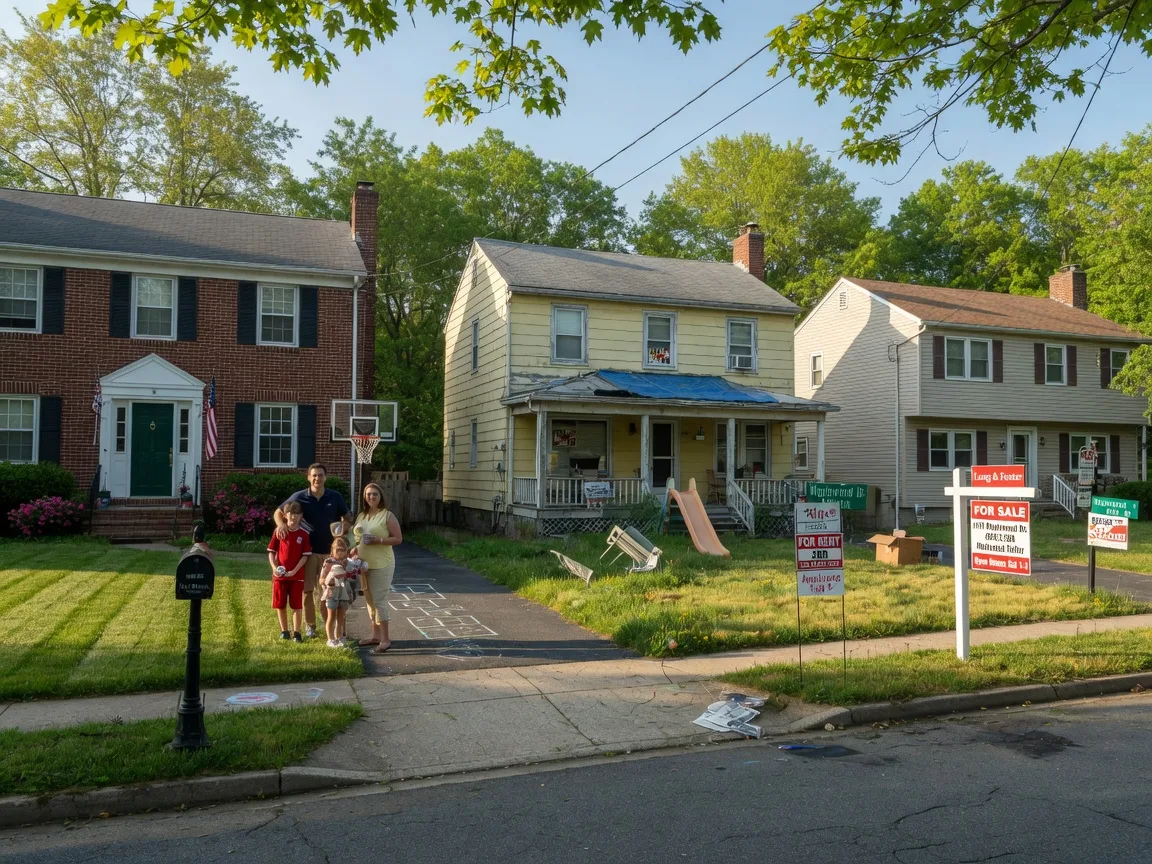
To understand how the keep-or-sell decision plays out in real life, consider three families who each inherited a three-bedroom, two-bath colonial home in the same Montgomery County neighborhood. Each home was valued at approximately $550,000, with no mortgage. Each family had three adult siblings as equal beneficiaries. But each family had different goals, different financial situations, and different emotional relationships with the property.
Family A: The Keeper
One sibling, Sarah, lived in the same town and wanted to move into the family home with her two children. She had a stable job, good credit, and could afford a mortgage to buy out her two siblings. The home was in good condition and needed only cosmetic updates.
Her decision: Sarah obtained a mortgage for $366,667 to buy out her two siblings at $183,333 each. She moved into the home, saving approximately $2,200 per month in rent she had been paying for her apartment. The mortgage payment was $2,350 per month, so her net housing cost increased by only $150 per month. She qualified for the primary residence capital gains exclusion if she ever decided to sell in the future.
Why it worked. Sarah genuinely wanted to live in the home and could afford it. The buyout gave her siblings the cash they needed. The home stayed in the family. Sarah's monthly housing cost barely increased because the mortgage replaced rent she was already paying.
Family B: The Renter
All three siblings lived out of state and had no desire to move back. The home was in good condition. The rental market in the neighborhood was strong, with similar homes renting for $2,800 to $3,200 per month.
Their decision: The siblings hired a property manager (10% of monthly rent) and rented the home for $3,000 per month. Annual rental income was $36,000. Annual expenses were approximately $14,000 (property taxes, insurance, property management, maintenance, vacancy reserves). Net annual cash flow was approximately $22,000, or $7,333 per sibling per year. The property appreciated approximately 4% per year, adding another $22,000 in annual equity growth.
Why it worked. The siblings were aligned on the plan. The rental market was strong. They had a professional property manager handling the day-to-day work. They were willing to hold the property for the long term and defer their inheritance as ongoing income. The property was in good condition with minimal immediate repair needs.
Family C: The Seller
The three siblings lived in different states. One sibling needed their inheritance immediately to pay for a child's college tuition. Another was going through a divorce and needed cash. The home needed a new roof and significant updates. The siblings did not have the resources or the inclination to manage repairs, rentals, or buyouts.
Their decision: The siblings listed the home on the open market after a light cleanup and professional photography. The home sold for $535,000 (slightly below market due to the needed roof). After the 6% commission ($32,100), closing costs ($13,375), and the roof credit negotiated with the buyer ($10,000), net proceeds were approximately $479,525. Each sibling received approximately $159,842.
Why it worked. The siblings needed cash, not a property. Selling gave each of them immediate liquidity for their specific financial needs. The home had deferred maintenance that none of them could handle from out of state. The sale eliminated all carrying costs, insurance headaches, and management responsibilities. The process was completed in 60 days, giving the siblings closure and financial freedom.
Case Study Takeaway
All three families made the right decision for their situation. Sarah kept the home because she wanted to live there and could afford a buyout. Family B rented because they wanted ongoing income and had the resources to manage it remotely. Family C sold because they needed cash immediately and did not want the burden of property ownership. None of the three choices was universally right or wrong. Each was right for the family that made it.
Common Mistakes When Deciding Whether to Keep or Sell an Inherited Home
With 27 years and close to 1,000 homes sold, I have seen families make the same mistakes again and again when deciding what to do with an inherited home.
Mistake #1: Making the decision based on emotion alone. Guilt, grief, and nostalgia are powerful forces. They can lead you to keep a home that drains your finances or sell a home you should have kept. Acknowledge your emotions, but do not let them make the final decision alone.
Mistake #2: Not getting a professional valuation before deciding. Zestimates and tax assessments are not reliable for decision-making. A professional valuation gives you a defensible, accurate number to base your decision on.
Mistake #3: Ignoring carrying costs. A home that costs $1,154 per month to carry before a mortgage payment is a significant financial obligation. Many families underestimate these costs and find themselves in trouble a year later.
Mistake #4: Keeping the home because you cannot agree with your siblings. Indecision is a decision. If you and your siblings cannot agree on what to do, the default outcome is that the property sits vacant, losing value, while carrying costs drain the estate.
Mistake #5: Renting without understanding what it takes to be a landlord. Property management is work. Tenants call at 2 AM. Repairs need to happen immediately. Evictions are expensive and stressful. If you are not ready for these realities, do not become a landlord.
Mistake #6: Failing to consider the tax implications of each option. The step-up in basis, the primary residence exclusion, and rental property depreciation all have significant tax consequences. Talk to a CPA before making your decision.
For more on what can go wrong, read What Are the Common Mistakes in Probate Real Estate? and What Not to Do in Probate When Real Estate Is Involved.
Marc's Advice
Marc's Advice
One of the hardest decisions families face is whether to keep or sell a loved one's home. There isn't one right answer. The best decision is the one that fits the family's goals, financial situation, and responsibilities while protecting the estate. That's why I encourage families to evaluate every option before making a final decision.
Start by getting a professional valuation. Know what the property is worth as-is, what it could be worth with repairs, and what cash offers are available. Then run the numbers on each option honestly: carrying costs, opportunity cost, potential returns, and tax consequences.
Talk to your siblings openly about what each of you needs and wants. If you cannot all agree, that does not mean you are stuck. A professional mediator, estate attorney, or probate specialist can help you find a path forward.
And remember: the person who left you the home wanted to help you, not to burden you. Making the best decision for your family honors their intent, whatever that decision turns out to be.
For more guidance from Marc on navigating the probate process, read Effective Advice for Personal Representatives Administering an Estate and Probate Realtor Specialists: How We Help the Executor.
If This Were My Family
If This Were My Family...
If this were my family, I would start by acknowledging something hard: you are in a position you did not ask for, handling responsibilities you did not choose, and trying to make the best decisions for people you love. That is not easy. But this decision is one you can get right, and getting it right will affect your family's finances and relationships for years to come.
I would start by getting a professional valuation of the property. I would run the numbers on every option: keep, rent, sell as-is, improve and sell, and hybrid strategies. I would talk through each option with the people who matter most. I would consult with a CPA about the tax implications. I would not let guilt drive the decision, and I would not let fear of conflict keep me from making any decision at all.
And I would remember that the home is a tool, not a memorial. The memories of the person who lived there live in you, not in the walls and roof. Whatever you decide, do it with intention, with information, and with love for the people the decision affects.
Frequently Asked Questions
What is the most common decision families make about inherited homes in Maryland?
Most families choose to sell the inherited home. Surveys suggest approximately 70% of heirs who inherit a home choose to sell it rather than keep or rent it. The reasons include needing the cash, not wanting the responsibilities of ownership, and living far from the property.
Do I have to pay capital gains tax if I sell an inherited home right away?
In most cases, no. Because of the step-up in basis, the property's tax basis is its value on the date of death. If you sell it for approximately that same value shortly after inheriting it, there is little or no capital gain. If the property appreciates significantly between the date of death and the sale, or if you live in it first and then sell, the tax treatment may be different.
Can I rent out an inherited home while it is still in probate?
Renting a probate property is possible but requires court approval in most cases. The Personal Representative must demonstrate that renting is in the best interest of the estate. The rental income becomes part of the estate and must be accounted for in the estate's financial records.
What if one sibling wants to keep the home but cannot afford to buy out the others?
There are several options. The sibling could obtain a mortgage to finance the buyout. The siblings could agree to a seller financing arrangement where the buying sibling pays the others over time. The family could agree to a shared ownership arrangement with a clear exit strategy. If none of these work, selling the home and dividing the proceeds may be the fairest solution.
How long can I wait before deciding what to do with an inherited home?
There is no legal deadline for the decision itself, but carrying costs create a practical deadline. Every month the property sits vacant costs the estate approximately $1,000 to $1,500 (without a mortgage). If the home has a mortgage, the cost is much higher. Do not let indecision drain the estate while you figure out what to do.
Can I live in an inherited home during probate in Maryland?
Yes, but with important caveats. The Personal Representative must ensure that occupying the home does not harm the estate. The heir living there may need to pay fair market rent to the estate if they are using an asset that belongs to all beneficiaries. The legal and financial implications are discussed in detail in Can I Live in an Inherited House During Probate in Maryland?
What if the inherited home has a reverse mortgage?
If the inherited home has a reverse mortgage, the loan becomes due when the last borrower dies or moves out permanently. Heirs typically have 30 to 60 days to either pay off the loan (usually by selling the home) or arrange an alternative. Failing to act can result in foreclosure. Read more in What If the Probate House Has a Reverse Mortgage in Maryland?
Should I compare cash offers before deciding whether to sell?
Absolutely. Getting an instant cash offer gives you a baseline for the property's as-is value. You can then compare that to what the open market might produce after repairs and staging. Having both numbers lets you make an informed decision about which selling path is best for the estate.
How do I know if an inherited home is a good investment to keep?
A home is a good investment to keep if: (1) the carrying costs are manageable within your budget, (2) the location has strong long-term appreciation potential, (3) you or a family member will use the home, (4) the rental market is strong enough to generate positive cash flow if you change your mind, and (5) keeping the home does not prevent you from meeting other financial goals. Run the numbers honestly before deciding.
Inherited Property Decision Worksheet
Use this worksheet to compare your options side by side. Fill in the numbers for your specific property and situation.
Your Property Details
Property value (professional appraisal): ____________
Mortgage balance (if any): ____________
Monthly carrying costs (taxes, insurance, utilities, HOA): ____________
Estimated repair/maintenance needs (first year): ____________
Estimated monthly rent (if rented): ____________
Estimated net proceeds if sold: ____________
Option Comparison
Keep (Live In): Can I afford the carrying costs? Do I want to live here? Can I buy out other heirs?
Rent: Is the rental market strong? Can I afford repairs and vacancies? Do I want to be a landlord?
Sell As-Is: Do I need cash quickly? Is the home in poor condition? Does the estate need to settle?
Improve and Sell: Will repairs produce a positive return? Do I have the time and resources to manage them?
Hybrid: Do I have the resources to execute a multi-step plan? What is the exit strategy?
Key Takeaways
- There is no single right answer. The best decision fits your family's goals, financial situation, and responsibilities.
- Get a professional valuation before making any decision. Zestimates and tax assessments are not reliable for decision-making.
- Carrying costs add up quickly. A vacant property costs $1,000 to $1,500 per month in taxes, insurance, and utilities alone.
- The step-up in basis means you will owe little or no capital gains tax if you sell the inherited home shortly after inheriting it at fair market value.
- Renting a property is not passive income. It requires active management, maintenance reserves, and tolerance for tenant issues.
- Opportunity cost matters. Compare what each option produces versus what the alternatives would produce.
- Guilt is not a financial plan. Letting go of the home does not mean letting go of the person who lived there.
- If you cannot agree with your siblings, indecision is still a decision. The property sits vacant, losing value, while carrying costs drain the estate.
- Talk to a CPA about the tax implications of each option before you decide.
- A hybrid strategy (live in it, then sell it, or rent it, then sell it) can combine the best of multiple options.
Next Steps: Making Your Decision
You now have a comprehensive framework for deciding whether to keep or sell an inherited house in Maryland. The next step is to gather the specific information you need for your situation and start the process of evaluation.
Here is your action plan:
- Get a professional valuation. Schedule a free Probate Value Analysis to know exactly what the property is worth as-is and after improvements.
- Get an instant cash offer. Compare what a cash buyer would pay against what the open market could produce.
- Run the numbers. Use the Decision Worksheet above to compare every option for your specific property.
- Talk to your family. Have honest conversations about everyone's needs, goals, and concerns.
- Consult with professionals. Talk to a CPA about tax implications. Talk to an estate attorney about legal requirements.
- Make a decision with confidence. Knowing you evaluated every option and chose the one that best fits your family.
Related Guides
- Selling a Probate House: Complete Guide
- How to Sell a Probate Property in Maryland
- Legal Steps to Sell a Probate House in Maryland
- Should You Sell the Probate House As-Is or Make Repairs First?
- Will I Owe Taxes When I Inherit or Sell a House in Maryland?
- Inheriting a Home in Maryland? Here's What You Need to Know
- How Much Is My Inherited House Worth in Maryland?
- Inherited Home: To Sell or Keep?
- Steps to Sell Inherited Property in Probate
- Inherited Property: What Do You Do Now?
Start With a Free Consultation
If you are responsible for an inherited home in Maryland and need guidance on whether to keep or sell, schedule a free consultation. We will walk through your situation, explain your options, and answer every question you have. No obligation, no pressure, just clarity.
Legal Note
If family members disagree about legal rights or the administration of the estate, seek advice from competent legal counsel.
Legal Note
Consult your CPA or tax advisor regarding the tax consequences of your specific situation.
Legal Note
Court requirements vary depending on the circumstances of the estate. Consult your probate attorney for guidance.