Ultimate Guide
August 2, 2026 · Marc Cormier
Should You Stage a Probate House Before Selling It in Maryland?
Quick Answer
Staging is one of the highest-return investments a Personal Representative can make. It helps buyers emotionally connect with the home, often leading to faster sales and stronger offers. However, not every property should be staged. The decision depends on the home's condition, the target buyer, and the expected return on investment. In many Maryland probate sales, professional staging produces a significantly higher net proceeds than selling an empty or cluttered home.
Table of Contents
- What Is Home Staging
- Why Home Staging Works
- How Buyers Actually Shop for Homes
- Why Empty Homes Are Harder to Sell
- One of the Biggest Benefits of Staging
- Which Homes Should Be Staged
- Which Homes Probably Shouldn't Be Staged
- Our Approach to Staging
- Real Case Study
- The Cost of Not Staging
- Common Staging Mistakes
- Questions Every Personal Representative Should Ask
- Marc's Advice
- Frequently Asked Questions
- Key Takeaways
- Get an Instant Offer
Introduction: The Staging Question Every Personal Representative Faces
Many Personal Representatives inherit homes that are empty, outdated, or filled with memories. Buyers have difficulty visualizing an empty house. They walk through rooms and see blank walls, outdated fixtures, and missing furniture. They cannot picture where their couch would go. They cannot imagine holiday dinners in the dining room. Staging solves this problem by helping buyers see the home's potential instead of its current condition.
The decision to stage is not just about aesthetics. It is a financial decision that directly affects the estate's net proceeds. When done correctly, staging produces a measurable return. When done poorly, or when applied to the wrong property, it can waste estate funds that could have been distributed to beneficiaries.
This guide covers everything a Maryland Personal Representative needs to know about staging a probate home: what it costs, which properties benefit most, and how to decide whether staging is the right move for your specific situation.
What Is Home Staging?
Staging is marketing. It is not decorating. It is not covering defects. It is presenting the home so buyers can imagine living there.
Professional staging involves strategic placement of furniture, lighting, artwork, accessories, area rugs, plants, and color to create a specific feeling in each room. The goal is to highlight the home's best features, minimize its weaknesses, and create an emotional connection between the buyer and the property.
A professional stager considers the flow of the home. They arrange furniture to create natural pathways through rooms. They choose scale-appropriate pieces so rooms appear spacious and functional. They add warmth through textiles, lighting, and accessories that make the space feel lived-in without feeling cluttered.
Staging is particularly important in probate situations because many probate homes are either completely empty or filled with the deceased's belongings. Neither scenario helps a buyer imagine their own life in the space.
Why Home Staging Works
Buyer psychology drives this. People purchase emotionally first. Logic comes later.
People do not buy bedrooms. They buy Thanksgiving dinners, birthday parties, Christmas mornings, backyard cookouts, and future memories. Staged homes tell that story. When a buyer walks into a staged primary bedroom, they do not see someone else's furniture. They see themselves sleeping there on a Sunday morning.
A staged living room with a comfortable sofa, warm lighting, and thoughtful accessories tells the buyer: "This is where you will relax after a long day. This is where your family will gather. This is where life happens." An empty living room tells the buyer nothing. They have to work to imagine the space, and most buyers are not good at that.
According to the National Association of Realtors, 82% of buyers' agents say staging a home makes it easier for buyers to visualize the property as their future home. That visualization is the single most important factor in converting a showing into an offer. When a buyer can picture themselves living in a home, they are far more likely to make a competitive offer.
The Psychology of Staging
Buyers make their first emotional assessment within seconds of entering a home. Staging taps into that instinctive response by creating an immediate sense of warmth, belonging, and possibility. Once the emotional connection is made, the rational mind finds reasons to justify the purchase.
How Buyers Actually Shop for Homes
More than 95% of buyers begin their search online. The first impression is almost always a photograph on a screen. If that photograph shows an empty room with bad lighting and outdated fixtures, the buyer swipes past. They never schedule a showing. They never give the home a chance.
A staged home performs better in every marketing channel: MLS listings, Facebook, Instagram, Google, AI search results, video tours, YouTube, and email marketing. Professional staging photographs well. The images look like they belong in a magazine, not like an abandoned property. The better the home looks online, the more showings it receives.
In today's market, buyers are scrolling through dozens of listings before deciding which three or four homes to visit in person. Your listing image is competing for attention against every other home on the market. A staged home with professional photography stops the scroll. An empty room does not.
The numbers back this up. Staged homes typically spend 73% less time on the market than their unstaged counterparts. Faster sales mean fewer carrying costs: mortgage payments, insurance, utilities, and property taxes that drain the estate while the home sits waiting for the right buyer.
Why Empty Homes Are Harder to Sell
Empty rooms appear smaller. Without furniture to provide scale, buyers cannot judge whether their sofa will fit, whether their dining table will fit eight people, or whether their bedroom set will fit against the far wall. The room feels undefined and uncertain.
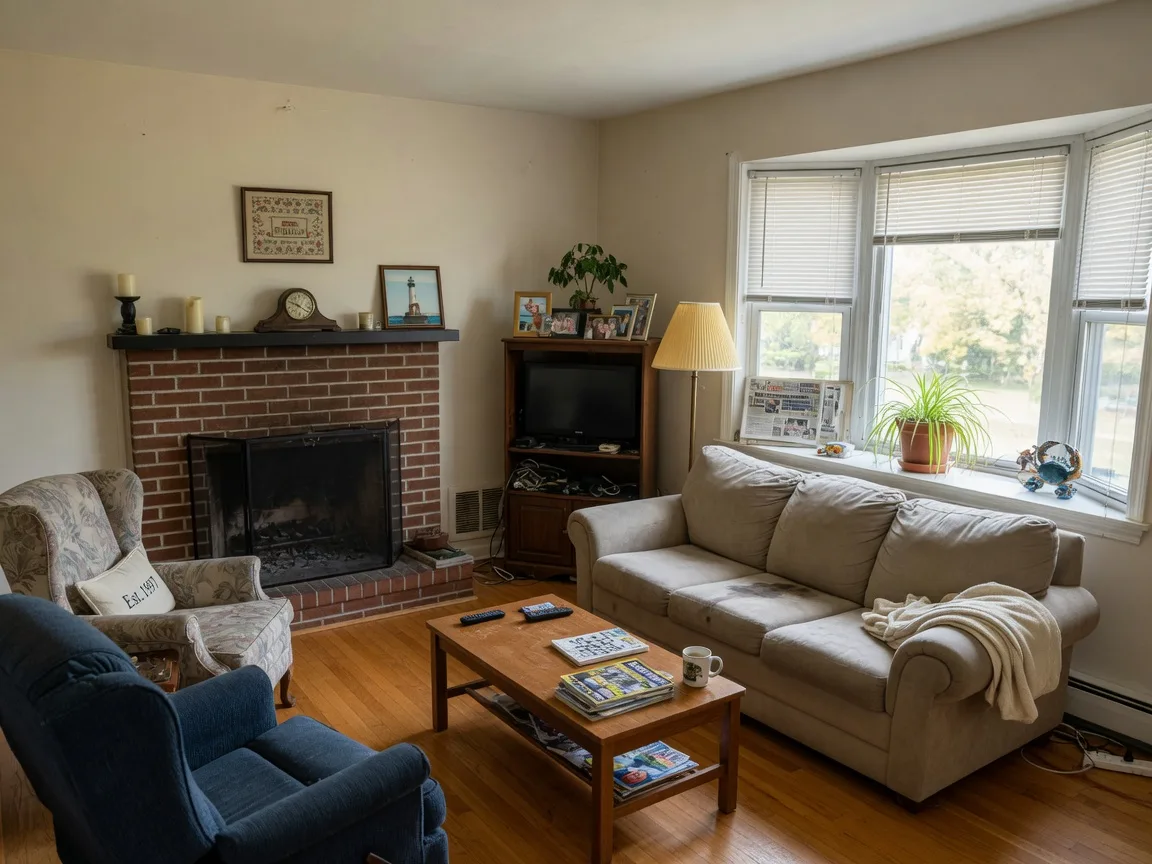
The home feels cold. Every sound echoes. Every flaw stands out. The worn patch of carpet, the scuff mark on the baseboard, the crack in the ceiling. In a furnished home, these details fade into the background. In an empty home, they become the focal point.
The lack of warmth is palpable. An empty home lacks the visual cues that make a space feel like a home: soft textiles, warm lighting, lived-in comfort. Buyers walk through and feel like they are touring a storage unit, not a home where they could build a life.
Professionally staged rooms feel larger because furniture provides scale and context. A well-placed sofa defines the living area. A dining table shows the room's potential. A bed in the primary bedroom anchors the space. Suddenly the buyer can see themselves in the home, and that changes everything.
One of the Biggest Benefits of Staging
Professional staging changes what buyers focus on. Instead of immediately noticing old paint, small cosmetic flaws, outdated fixtures, minor imperfections, and empty corners, they begin imagining their own life in the space.
They imagine their couch against that wall. They imagine holiday dinners in the dining room. They imagine children playing in the family room. They imagine watching football on Sunday afternoons. They imagine morning coffee on the back deck. They imagine family gatherings in the kitchen. They imagine sleeping in the primary bedroom.
Staging does not hide defects. It shifts attention away from minor imperfections and toward the lifestyle the home offers. The buyer begins seeing their future, not your past. That shift in focus is the single most powerful tool a seller has.
For a probate home that may be outdated, this is especially valuable. An older home with good bones but dated finishes can feel hopeless to a buyer walking through empty rooms. Add furniture, warm lighting, and thoughtful accessories, and that same home feels like a charming fixer-upper with potential. The difference is perception, and perception drives price.
Which Homes Should Be Staged
Not every probate home benefits from staging. These are the properties where professional staging makes the strongest financial case:
Vacant homes. Empty homes are the strongest candidates for staging. Without furniture, buyers cannot visualize. Staging an empty home provides the context buyers need to form an emotional connection.
Luxury homes. Buyers in the luxury market expect a certain presentation. An empty luxury home feels unfinished. A staged luxury home feels aspirational. The investment in staging is proportionally smaller relative to the potential sale price, making the ROI even more compelling.
Move-up neighborhoods. In neighborhoods where most homes are owner-occupied and well-maintained, an empty or cluttered probate home stands out for the wrong reasons. Staging helps it compete with the other homes on the market.
Owner-occupant buyers. If your target buyer is a family who will live in the home, staging is invaluable. Investors and house flippers do not need staging. They are buying the numbers. But families buy with emotion, and staging speaks to emotion.
Updated homes. If the home has been updated or is in good condition, staging maximizes that value. A home that already looks good will look exceptional with staging, and buyers will pay a premium for exceptional.
Homes competing with new construction. New construction homes come staged by default with model homes that are professionally designed. A probate resale competing against new construction needs staging to level the playing field.
Which Homes Probably Shouldn't Be Staged
Staging is not always the right answer. These properties are typically better sold without staging:
Fire damage. A home with significant fire damage needs repair before staging makes sense. Invest in remediation first, then assess whether staging is appropriate.
Major mold. Health hazards must be addressed before any presentation. Staging a home with active mold is irresponsible and may create liability for the estate.
Tear-downs. If the highest and best use of the property is land value, staging is a waste of money. The buyer is purchasing the lot, not the house. They do not need to see furniture.
Builder lots or raw land. Staging applies to homes, not land. If there is no livable structure, staging has no role.
Investor properties. If the target buyer is an investor looking for a flip or rental, they are buying based on the numbers. Staging will not increase their offer. They are looking at the ARV (after-repair value), not the current presentation.
Hoarder homes until cleaned. You cannot stage over clutter. The home must be cleaned out first. Once the clutter is removed, assess whether staging adds value. Sometimes a deep clean and paint are enough. Sometimes the home needs full staging to overcome the memory of what it looked like before.
Our Approach to Staging
Our team includes an interior designer who specializes in real estate staging for probate properties. She brings decades of experience helping Personal Representatives present their inherited homes in the best possible light.
For occupied homes, she walks through with the family and recommends furniture placement, suggests decluttering, and helps prepare the home for showings. Often, simply rearranging existing furniture and removing excess pieces transforms a room.
For vacant homes, she completely furnishes the property. Living room, dining room, kitchen, primary bedroom, secondary bedrooms, and home office. She brings in furniture, lighting, rugs, artwork, and accessories that match the home's architecture and the neighborhood's price point.
Once the staging is complete, professional photography follows. Our photographer knows how to capture staged rooms at their best: wide angles, natural light, detail shots that show the lifestyle the home offers. The listing goes live with fresh marketing that stops buyers mid-scroll.
We coordinate the entire process so the Personal Representative does not have to manage multiple vendors. One call, one plan, one team delivering a turnkey result.
Real Example: Staging in Action
In Potomac, MD, a probate estate invested in paint, cleanup, and professional staging before listing. The cash offer was $793,000. The final sale price: $1,412,000, a difference of $619,000. See the full Track Record for all four closings.
Track Record
Real example: A decluttering and staging job transformed a decades-long family home. Cash offer was $896,390. The home closed at $1,072,000. See the full track record →
Real Case Study: The Home That Sold for More After Staging
A home had sat on the market for months with another brokerage. Little activity. No offers. The listing had expired. The Personal Representative was frustrated and considering selling to a cash investor at a significant discount.
We toured the property. The problem was not location. The home was in a desirable neighborhood with good schools and strong demand. The problem was not price. The home was priced competitively for its market. The problem was that buyers could not imagine living there.
The home was vacant, dark, and tired. Empty rooms with worn carpet and outdated paint. Echoes and bare bulbs. Buyers walked through and saw a project, not a home. They offered accordingly, or they did not offer at all.
Our designer staged the home. Fresh furniture in every room. Warm lighting. Artwork on the walls. Rugs that defined each space. The living room became a cozy gathering space. The dining room became the setting for family dinners. The primary bedroom became a retreat.
Professional photography followed. Fresh marketing across all channels. The listing relaunched.
Instead of reducing the price, we increased the list price. The home sold in less than two weeks with multiple offers. Nothing changed about the home's structure, systems, or location. The only thing that changed was buyer perception.
When buyers can picture themselves living in the home, you have already won half the battle. That is what staging does. It does not change the home. It changes how buyers see the home.
The Cost of Not Staging
Here is the most important sentence in this entire guide: It costs less to stage a home than it costs for the first price reduction.
Consider the math. Professional staging for a typical single-family home in Maryland costs between $2,000 and $5,000 for the initial setup, with monthly rental fees of $500 to $1,500 while the home is on the market. The total investment is usually $3,000 to $6,000 over the course of a listing.
The first price reduction is usually $10,000 to $25,000. Sometimes more. That money comes directly out of the estate's net proceeds. It is gone forever. The beneficiaries do not see it.
Now compare:
- Staging investment: $4,000
- First price reduction: $20,000
Even if staging only helps you avoid the first price reduction, it has produced a 5-to-1 return on investment. And that is not the only cost to consider.
Carrying costs add up fast. Every month the home sits unsold, the estate pays: mortgage payments ($1,500 to $3,000 per month depending on the property), property taxes, homeowners insurance, utilities (electric, gas, water, trash), lawn maintenance and snow removal, and opportunity cost on the equity that could be distributed to beneficiaries.
A home that sits for three extra months because it is not staged could cost the estate $5,000 to $10,000 in carrying costs alone. Add in the price reduction, and the total cost of not staging can easily reach $25,000 to $35,000.
Lost momentum matters too. A home that sits for 60 or 90 days develops a stigma. Buyers and agents start asking, "What is wrong with it?" Showings drop off. The home becomes stale inventory. Even after a price reduction, it may not attract the same activity it would have generated in its first weeks on the market.
Staged homes sell faster. Faster sales mean fewer carrying costs, less stigma, and stronger offers. The math is clear.
Common Staging Mistakes
Even when staging makes sense, it can be done poorly. These are the most common mistakes we see in probate staging:
Too much furniture. Overstaging a room makes it feel smaller. The goal is to show the room's potential, not to fill every inch. A good stager knows when to leave space empty.
Wrong size furniture. A massive sectional in a small living room makes the room look tiny. A tiny loveseat in a large living room makes the space feel empty. Scale matters.
Family photos everywhere. Buyers need to see themselves in the home, not someone else's family. Remove all personal photographs, memorabilia, and highly personal items before staging or photographing.
Heavy curtains. Dark, heavy drapes block natural light and make rooms feel smaller and darker. Light, airy window treatments let in light and make spaces feel larger.
Dark paint. Bold, dark wall colors shrink rooms and feel oppressive. Neutral, light tones open up spaces and appeal to the widest range of buyers. Save the dark paint for accent walls in rooms with abundant natural light.
Too many decorations. Minimalism sells. Every accessory should serve a purpose: adding warmth, providing scale, or creating visual interest. Too many knickknacks, throw pillows, and decorative items create visual clutter.
Ignoring curb appeal. The front of the home is the first thing buyers see. A staged interior means nothing if buyers never make it through the front door. Fresh mulch, trimmed bushes, a clean walkway, and a welcoming front door matter.
Skipping professional photography. Staging without professional photography is like wrapping a gift and leaving it in a dark closet. Professional photos capture the staging at its best and make buyers want to see the home in person.
Trying to stage it yourself. Most people do not have access to the right furniture, the right art, and the right accessories. Professional stagers have warehouses full of inventory designed specifically for selling homes. They know what sells and what does not. DIY staging almost always looks like amateur hour.
Questions Every Personal Representative Should Ask About Staging
Before deciding whether to stage a probate property, ask these questions with your real estate agent:
- Should we stage this specific property? Not every home needs staging. Evaluate the condition, price point, and target buyer.
- Who is our target buyer? Owner-occupant families benefit from staging. Investors do not. Luxury buyers expect it. First-time buyers need help visualizing.
- Is this home likely to attract an owner-occupant, an investor, or a luxury buyer? The answer determines whether staging makes financial sense.
- How much will staging cost? Get a detailed quote from a professional staging company. Include setup fees, monthly rental, and removal fees.
- What is the expected return on investment? How much more will the home sell for if staged? How much faster will it sell? What carrying costs will be saved?
- Will staging reduce time on the market? Faster sales mean fewer carrying costs and less risk of stigma.
- Would staging increase competition among buyers? Multiple offers drive up the sale price. A staged home is more likely to generate bidding activity.
- Can the estate afford the upfront staging cost? Some staging companies work with estates on payment terms. Some allow payment at closing.
- What is the fallback plan? If staging does not produce the expected results, what is the next step? Having a plan prevents wasted time and money.
For a broader discussion of pricing strategy and market positioning, read How Do You Price a Probate House in Maryland?
Marc's Advice
I have seen it happen dozens of times. A Personal Representative is convinced the home needs a big price cut because it has been sitting on the market for months. They are ready to lose $20,000 or $30,000 in proceeds. Then we stage the home, take new photos, and relaunch at the same price or higher. And it sells.
Buyers purchase emotionally. They buy the feeling of walking into a space and knowing it could be theirs. That feeling does not happen in an empty room with a bare bulb and an echo. It happens in a warm, furnished space that invites them to imagine their life there.
If you are trying to decide whether to stage, start with this one question: If you were a buyer walking into this home right now, could you picture yourself living here? If the answer is no, your buyers will feel the same way.
It costs less to stage than it costs for the first price reduction. That is not a marketing line. That is math.
Marc Cormier, Realtor & Probate Specialist
Frequently Asked Questions
Should every probate home be staged?
No. Staging makes financial sense for vacant homes, luxury properties, and homes targeting owner-occupant buyers. Homes that need major structural repairs, tear-downs, or properties targeting investors may not benefit from staging. Evaluate the expected ROI before committing estate funds.
Can occupied homes be staged?
Yes. Many occupied homes benefit from partial staging. A professional stager can work with existing furniture, recommend rearrangements, suggest removing excess pieces, and add key accessories and lighting to improve the presentation without completely replacing everything.
Can empty homes be staged?
Absolutely. Empty homes are the strongest candidates for staging. A completely vacant home gives the stager a blank canvas to create the ideal presentation. Every room can be furnished to show its full potential and best use.
How much does staging cost?
Professional staging for a typical Maryland single-family home costs $2,000 to $5,000 for the initial setup, plus $500 to $1,500 per month for rental of the furniture and accessories. Total cost for a three-month listing is typically $3,500 to $9,500. The cost varies based on the size of the home and the amount of furniture needed.
Can staging be paid at settlement?
Some staging companies offer deferred payment options that allow the cost to be paid from the sale proceeds at closing. This can be helpful when the estate does not have liquid funds available for staging. Ask your staging company about their payment terms before signing a contract.
Does staging increase appraisal value?
Appraisers value homes based on comparable sales, square footage, condition, and location. Staging itself does not directly increase the appraised value. However, staging can lead to a higher sale price through buyer competition, and a ratified contract at a higher price can influence the appraiser's opinion of value. The effect is indirect but real.
How long does staging take?
A professional staging company can typically stage a vacant home in one to three days, depending on the size. Occupied homes may take longer because the stager needs to work around existing furniture and belongings. Most staging projects are complete within a week of the initial consultation.
Should investors stage homes?
Generally no. Investors are buying based on the after-repair value and their profit margin. They do not need to emotionally connect with the home. Staging for an investor buyer is usually not a good use of estate funds. If your target buyer is an investor, price the home appropriately for its condition and sell as-is.
What rooms should be staged?
At minimum, stage the living room, dining room, primary bedroom, and kitchen. If the budget allows, staging secondary bedrooms and a home office adds significant value. The key rooms are the ones buyers focus on most: the main living areas and the primary suite. These rooms should always be staged in a probate listing.
Can virtual staging replace real staging?
Virtual staging can be useful for online listings, but it does not replace real staging. Buyers who arrive at a home expecting furnished rooms will be disappointed by empty space. Virtual staging also raises disclosure concerns in some states. Use virtual staging as a supplement, not a replacement, for real staging when possible.
Do staged homes sell faster?
Yes. According to the National Association of Realtors, staged homes spend 73% less time on the market than non-staged homes. Faster sales mean fewer carrying costs for the estate and less risk of the home developing a stale listing stigma that requires price reductions to overcome.
Who removes the furniture after the home sells?
The staging company handles removal. Their contract typically includes both delivery and pick-up of all furniture and accessories. The removal is scheduled around the closing date so the new owners take possession of an empty home. Confirm the removal timing and any costs in your staging agreement.
Key Takeaways
- Staging is one of the highest-return investments a Personal Representative can make, often producing a 5-to-1 ROI or better.
- Buyers purchase emotionally first. Staging helps them visualize their life in the home, which leads to faster sales and higher offers.
- Empty homes are the strongest candidates for staging. Occupied homes may benefit from partial staging or simple decluttering and rearrangement.
- Homes targeting owner-occupant buyers, luxury properties, and homes in competitive neighborhoods benefit most from staging.
- Tear-downs, investor properties, raw land, and homes with major unremediated damage should not be staged.
- It costs less to stage a home than it costs for the first price reduction.
- Professional photography following staging is essential to capture the full value of the investment.
- Common staging mistakes include overfurnishing, using wrong-scale furniture, keeping family photos visible, and skipping professional photography.
If This Were My Family...
If this were my family, I would strongly consider staging an empty probate home before listing it. I have seen too many families accept a low cash offer or a painful price reduction simply because buyers could not picture themselves living in an empty, echoey space with worn carpet and bare bulbs. The cost of staging, typically a few thousand dollars, is almost always less than the first price reduction. I would ask my Realtor for a side-by-side comparison, what the home could sell for empty versus what it could sell for staged and professionally photographed. If the numbers showed a clear return, I would stage without hesitation. And I would document that decision and its financial rationale. That is not just good real estate practice. That is how you protect the estate and fulfill your fiduciary duty.
Ready to Get an Instant Offer on Your Maryland Probate Property?
Before you decide whether to stage, know what your home is worth as-is. Comparing cash offers against your staging and marketing projections is the smartest first step you can take as Personal Representative. You may find that selling as-is to the right buyer nets more for the estate, or you may confirm that staging is the right path to maximize value.
Our team helps Maryland Personal Representatives evaluate every option: staging with professional marketing, as-is cash offers, targeted repairs with market listing, and net proceeds analysis for each path. We provide clear, data-driven guidance so you can make informed decisions that protect the estate and its beneficiaries.
Get an Instant Offer on Your Maryland Probate Property
Before you invest in staging or repairs, find out what your property is worth as-is. Compare your options with data, not guesswork. That single step protects you more than anything else you can do in this process.
Get Instant OfferSchedule a Staging Consultation
Let our team walk through your probate property and create a customized staging plan. We will provide a detailed cost estimate, expected ROI projection, and timeline so you can make an informed decision. Our goal is not simply to sell your probate home. It is to help you fulfill your fiduciary duty while maximizing the value of one of the estate's largest assets.
What Happens Next?
Now that you understand the value of staging, here are the next steps in the selling journey:
Legal Note
For legal questions about your responsibilities as a Personal Representative, consult a competent Maryland probate attorney.