Ultimate Guide
August 2, 2026 · Marc Cormier
Who Is the Best Probate Real Estate Agent in Maryland?
The best probate real estate agent in Maryland is someone who understands both real estate and the special problems surrounding inherited property. Look for experience with personal representatives, vacant homes, clean-outs, repairs, court-related sales and family conflicts. Marc Cormier is a Maryland probate real estate specialist with more than 25 years of experience helping estates prepare and sell inherited homes.
Quick Answer
Choosing the right probate Realtor is not about finding someone who sells houses. It is about finding someone who understands probate. A probate-specialized agent brings knowledge of court timelines, fiduciary responsibilities, estate documentation, vendor networks, and negotiation strategies that general agents typically lack. The right Realtor helps you fulfill your duty as Personal Representative, protect the estate's value, and navigate every stage of the Maryland probate process with confidence.
Table of Contents
- Why Probate Requires a Specialist
- What Separates a Probate Realtor from a General Agent
- Experience That Actually Matters
- Questions to Ask During Interviews
- 20 Interview Questions Every PR Should Ask
- Marketing and Photography
- Cash Offer Strategy
- MLS Exposure
- Vendor Network
- Communication Style
- References and Reviews
- Probate Specialization
- Maryland Case Study
- Common Mistakes
- Marc's Advice
- If This Were My Family
- Frequently Asked Questions
- Realtor Interview Checklist
- Key Takeaways
- Next Steps
- 1. Proven Probate Experience
- 2. Complete Property Management
- 3. More Than One Selling Option
- 4. Financial Decision-Making
- 5. Local Maryland Knowledge
- 6. Case Studies and Results
- 7. Independent Proof
- How to Choose: The Checklist
- Regular Listing Agent vs. Probate Specialist
- Related Questions
- Recommended Video
Why Probate Requires a Specialist
Selling a home during probate is fundamentally different from a standard real estate transaction. The difference is not cosmetic. It is structural. A probate sale involves court supervision, fiduciary duties, multiple stakeholders, and a legal process that does not exist in a normal home sale. A general agent who excels at helping young families buy their first home may have zero experience with the Maryland Orphans' Court, Letters of Administration, or the specific documentation that a probate closing requires.
Here is what a probate specialist handles that a general agent typically does not:
Court-approved sale timelines. In Maryland, the Orphans' Court or Register of Wills oversees the process. A probate specialist knows exactly when court approval is needed, how to obtain it, and what the waiting periods are. A general agent does not know these timelines and may make promises to buyers that the court cannot keep.
Fiduciary documentation. The Personal Representative (PR) must document every decision, every offer reviewed, every expense incurred, and every communication with heirs. A probate specialist helps structure that documentation so the PR can demonstrate they acted in the estate's best interest.
Estate accounting. Proceeds from a probate sale go into the estate account, not directly to heirs. The PR must account for every dollar. A probate specialist coordinates with the estate attorney and CPA to ensure the sale proceeds are handled correctly.
Heir communication and consent. When multiple heirs are involved, a general agent may not know how to handle disagreements, who has authority to make decisions, or what happens when one heir wants to sell and another wants to keep the property. A probate specialist has navigated these dynamics many times.
Vacant property management. Probate homes often sit vacant for months. A specialist has a network of vendors who handle: winterization, lawn maintenance, security, insurance compliance, utility transfers, and regular inspections. A general agent may not even know these issues exist.
For a deeper look at what probate real estate actually involves, read our complete Guide to Probate or explore what probate real estate is.
The Core Difference
A general agent sells houses. A probate specialist sells houses inside a legal process. The process comes first, and every decision must work within it. That is why experience matters more in probate than in any other type of real estate transaction.
What Separates a Probate Realtor from a General Agent
You can walk into any real estate office in Maryland and find an agent who will say they can handle your probate sale. Many of them believe it. But belief is not the same as competence. Here is what actually separates a probate specialist from a general agent.
Transaction volume. How many probate sales has the agent closed? An agent who has handled 50 or 100 probate transactions has seen every scenario: heirs who fight, buyers who back out, title issues, creditor claims, court delays, and more. An agent who has handled one or two probate sales is still learning.
Court relationships. A specialist knows the clerks, the Register of Wills offices, and the procedures in each Maryland county. They do not have to look up whether Montgomery County requires a different form than Prince George's County. They already know.
Attorney network. Probate sales require coordination with estate attorneys, probate attorneys, and CPAs. A specialist has existing relationships with attorneys who understand real estate. A general agent may have never worked with an estate attorney before.
Understanding of fiduciary duty. Your duty as PR is to maximize the estate's value, not to sell quickly, not to make everyone happy, and not to minimize your own effort. A specialist understands this and structures every recommendation around it.
Pricing expertise. Probate homes often need specialized valuation. A specialist knows how to value a home that has been vacant for two years, a home with deferred maintenance, a home with hoarding, or a home that was last updated in 1985. Those valuations look very different from a standard home valuation.
Cash offer and iBuyer relationships. Many probate estates benefit from comparing a cash offer against a traditional listing. A specialist has existing relationships with credible cash buyers and iBuyer platforms and can run that comparison honestly, without steering you toward one option because it is easier for them.
For a closer look at what questions separate a specialist from a generalist, read our guide on questions to ask before hiring a probate real estate agent in Montgomery County.
Experience That Actually Matters
When you interview probate agents, years in the business matter less than you might think. An agent with 20 years of experience but only two probate sales brings less probate-specific knowledge than an agent with five years and fifty probate transactions. Here is what to look for.
Number of probate closings. Ask for a specific number, not a vague answer. An agent who cannot tell you how many probate sales they have closed probably has not closed many.
Maryland-specific experience. Probate is different in every state. An agent who handled probate in Florida or California has to learn Maryland law from scratch. Ask specifically about Maryland Orphans' Court experience.
County-specific experience. Even within Maryland, procedures vary. Montgomery County, Prince George's County, Howard County, and Baltimore County each have their own processes. An agent who has sold probate homes in the county where your property is located brings a real advantage.
Experience with your property type. Have they sold single-family homes, condos, townhouses, vacant land, or luxury properties? Different property types attract different buyers and require different marketing strategies.
Experience with your situation. Does the estate have a reverse mortgage? Is the property in foreclosure? Are there multiple heirs who do not agree? Has the home been vacant for years? Find an agent who has dealt with your specific circumstances before.
You can learn more about the probate process and timeline in How Long Does Probate Take in Maryland? and explore the legal steps to sell a probate house in Maryland.
Questions to Ask During Interviews
When you meet with potential agents, you are not just interviewing them to sell a house. You are interviewing a partner who will guide you through one of the most complex legal and financial transactions the estate will face. Treat the interview like the important conversation it is.
Every agent you interview should be able to answer these questions clearly and with specific examples, not general promises:
- How many probate sales have you personally closed in Maryland?
- Can you provide references from past Personal Representatives you have worked with?
- What is your process for coordinating with the estate attorney and the court?
- How do you handle communication when there are multiple heirs?
- What happens if the property needs repairs or cleaning before it can be listed?
- Do you have a network of trusted vendors for estate clean-outs, contractors, painters, and stagers?
- How do you determine the right list price for a probate home?
- Will you provide both an as-is valuation and an after-repair valuation?
- Can you help me compare a cash offer against a traditional MLS listing?
- How do you handle offers that require court approval?
- What is your marketing plan specifically for probate properties?
- How often will you provide updates, and in what format?
Pay attention not just to the answers but to how they are delivered. Confidence without specifics is a warning sign. A specialist can answer these questions from experience, not a script.
20 Interview Questions Every Personal Representative Should Ask
Below are 20 specific questions you can use to evaluate any probate Realtor. These questions go beyond general real estate interviewing. They are designed to reveal whether the agent truly understands probate or is simply hoping to learn on your estate's time and money.
Probate-Specific Interview Questions
- How many probate and estate sales have you personally closed in the past three years, and can you name the counties where those properties were located? A specialist should have a specific number, not a vague estimate, and should know the county where each sale occurred.
- What is your process for obtaining court approval of a sale in Maryland, and how long does it typically take from accepted offer to court confirmation? Court approval timelines vary by county. A specialist knows the exact process and timeframe.
- How do you handle a situation where one heir wants to sell and another wants to keep the property? This scenario arises often. The answer should address mediation, communication, and legal requirements, not just "we will work it out."
- What happens if the property has a reverse mortgage or other liens? Walk me through your process. Reverse mortgages, tax liens, and judgment liens are common in probate. The agent should describe specific steps for handling each type.
- Can you provide three references from Personal Representatives you have worked with in the past two years? May I call them? Willingness to provide references is critical. Reluctance is a red flag.
- What is a Schedule B Broker Price Opinion, and when would the estate need one? A probate specialist should know this term and explain it without hesitation.
- How do you coordinate with the estate attorney, and how often do you communicate during the sale process? The agent and attorney must work as a team. Ask for specifics about their communication cadence.
- What vendors do you work with for estate clean-outs, trash removal, and deep cleaning? How quickly can they mobilize? Delays cost estates money. A specialist has a ready network.
- Do you have contractors who can handle minor to moderate repairs, and do you offer any arrangement where repair costs can be deferred until closing? Some specialists can front repair costs. Ask directly.
- What is your approach to pricing a probate home that has been vacant for months or years? Vacant homes have unique challenges: utility issues, odor, pests, deferred maintenance. The pricing approach should account for all of them.
- How do you handle offers that come in below asking price? What factors would you consider before advising me to accept or counter? The answer should address net proceeds, carrying costs, market conditions, and the estate's timeline.
- What is your strategy for marketing a probate property that needs significant repairs or updates? The answer should go beyond "price it low" and include target buyer groups, online marketing, and agent outreach.
- How will you protect the vacant property from vandalism, theft, or trespassing while it is on the market? Vacant probate homes are targets. The agent should have a security plan.
- What happens if a buyer's financing falls through during the probate process? How do you handle backup offers? Probate timelines are less flexible than normal sales. Contingency planning is essential.
- How do you document your recommendations and communications so the Personal Representative can demonstrate they fulfilled their fiduciary duty? Documentation protects the PR if heirs or the court ever question decisions.
- What is your fee structure, and are you open to negotiation for probate or estate sales? Fee transparency should come early, not at the offer stage.
- How do you handle showings when the property is still fully furnished with the deceased owner's belongings? Showings of occupied estates require sensitivity and clear protocols.
- What is your experience with the specific county Orphans' Court where this property is located? County-specific knowledge is more valuable than general Maryland knowledge.
- Can you walk me through a typical probate sale timeline from listing to closing for a property like this one? The agent should provide a date-by-date or week-by-week estimate.
- If you were in my position as Personal Representative, what would you look for in an agent? What would make you choose one specialist over another? This question reveals whether the agent thinks like a PR or like an agent.
Do not expect every agent to ace every question. But the closer the agent comes to answering confidently and specifically, the more likely they are the right fit for your estate.
Marketing and Photography
Probate properties present unique marketing challenges. The home may be dated, cluttered, worn, or vacant. Standard listing photos can make even a valuable property look undesirable. A probate specialist invests in the right marketing to overcome these challenges.
Professional photography. Not just snapshots. A specialist hires a professional real estate photographer who knows how to make any property look its best. Proper lighting, angles, and staging make a measurable difference in buyer interest.
Virtual tours and video. Many probate buyers are out of state or represent investment funds that cannot visit in person. A virtual tour allows them to evaluate the property remotely, expanding the buyer pool significantly.
Drone photography. For properties with land, unique lots, or desirable locations, aerial photography can differentiate the listing from dozens of similar homes.
Strategic staging. Not every probate home needs full staging. But selective staging, such as adding furniture to a living room and primary bedroom, can help buyers visualize the home's potential. A specialist should advise honestly on whether staging makes financial sense for your property.
Digital marketing. Beyond the MLS, a probate specialist should market the property through: social media campaigns, email lists, targeted digital ads, broker open houses, and investor networks. The broader the reach, the more competition for the property.
For more on whether staging makes sense for your situation, read Should You Stage a Probate House Before Selling It in Maryland?
Cash Offer Strategy
One of the most valuable services a probate specialist provides is helping you compare cash offers against a traditional market listing. Many estates benefit from getting an instant cash offer as a baseline, then comparing it to what the open market could produce.
A strong probate specialist will:
Obtain multiple cash offers from reputable buyers and iBuyer platforms, not just one. Comparing offers gives you leverage and helps you understand the true as-is value.
Present the numbers side by side: the cash offer net proceeds versus the projected net proceeds from a traditional MLS listing, including carrying costs, commissions, and repair expenses.
Let the data drive the decision. If a cash offer produces comparable net proceeds with less risk and faster closing, a good agent will say so. If the market listing clearly produces more money, a good agent will recommend that path.
Never pressure either direction. The agent who pushes you toward one option without a thorough analysis of both is not serving your fiduciary duty. They are serving their own convenience.
Get an Instant Offer on Your Maryland Probate Property
Compare as-is cash offers against the open market potential. See what your property is worth today, with no obligation. That single step protects you more than anything else you can do in this process.
Get Instant OfferFor a deeper dive, read Should I Accept a Cash Offer for a Probate House in Maryland? and How Do Multiple Cash Offers Work When Selling a Probate House in Maryland?
MLS Exposure
Even if you receive a strong cash offer, listing on the MLS often creates competition that drives the final price higher. A probate specialist knows how to maximize MLS exposure for a property that might not show as well as a typical listing.
Key elements of effective MLS exposure for probate properties include:
Accurate condition disclosure. The listing should honestly reflect the home's condition while still attracting serious buyers. Overstating condition creates inspection issues later. Understating it discourages showings.
Strategic pricing. The list price should be set to generate showings and offers, not to meet an emotional target. A home that generates multiple offers in the first two weeks almost always sells for more than a home that sits for two months.
Agent outreach. A specialist reaches out to other agents who represent buyers looking for fixer-uppers, investment properties, or probate sales. These agents are more likely to bring qualified buyers than a general marketing campaign.
Open houses and broker tours. For properties that show reasonably well, open houses and broker tours can generate additional buyer interest and agent awareness.
To understand the full selling journey, explore our Complete Guide to Selling a Probate House.
Vendor Network
Most probate properties require more than marketing. They need cleanup, repairs, maintenance, and preparation before they can be listed. A probate specialist's vendor network can save the estate significant time and money.
Estate clean-out companies. These specialists remove furniture, personal belongings, and debris from the property. They handle donation, recycling, disposal, and sometimes estate sales for items of value.
Cleaners and restoration services. Deep cleaning, odor removal, carpet cleaning, and sometimes mold remediation or hoarding cleanup.
Contractors and tradespeople. Painters, flooring installers, landscapers, electricians, plumbers, handymen, and general contractors who can handle minor to moderate repairs at reasonable rates.
Inspectors and appraisers. Pre-listing home inspections help identify issues before they become buyer contingencies. Appraisers who understand probate provide accurate estate valuations.
Attorneys and title companies. Estate attorneys, probate attorneys, and title companies that specialize in probate closings are essential partners.
Ask potential agents specifically: "If I need the house cleaned out next week, who do you call and how fast can they be there?" The answer tells you whether they have a real network or are building one as they go.
For estate clean-out logistics, read Do You Have to Clean Out a Probate House Before Selling It in Maryland?
Communication Style
The Personal Representative often serves as the communication hub for: heirs and beneficiaries, the estate attorney, the CPA, the title company, contractors, the buyer, the buyer's agent, the property inspector, and sometimes the appraiser. That is a significant coordination burden. A probate specialist should reduce that burden, not add to it.
Weekly updates. At minimum, the agent should provide a weekly written update covering: showings and feedback, offers received, pending issues, upcoming deadlines, and next steps.
Accessible communication. The agent should be reachable by phone, email, and text during business hours, with a clear process for after-hours emergencies (like a broken pipe at a vacant property).
Heir-friendly updates. When multiple heirs are involved, the agent should provide updates in a format that can be easily shared, so all beneficiaries stay informed and no one feels left out.
Clear, jargon-free language. Probate has its own vocabulary. A good specialist translates legal and real estate terms into plain language so you can make informed decisions.
During your interview, ask: "How will we communicate, and how often should I expect to hear from you?" The answer should be specific, not vague.
References and Reviews
Online reviews are useful but limited. A five-star rating from a home buyer tells you nothing about the agent's probate expertise. References from past Personal Representatives are far more valuable.
When you call references, ask:
- Did the agent understand the probate process, or were they learning as they went?
- How was communication throughout the sale?
- Did the agent coordinate well with the estate attorney and the court?
- Were there any surprises during the process? How were they handled?
- Would you work with this agent again for another probate sale?
- What was the outcome for the estate? Did the sale go smoothly?
- Did the agent provide options (cash offer vs. listing) or push one path?
If an agent cannot provide at least three probate-specific references, consider that a significant warning sign.
Probate Specialization
Probate specialization is not a marketing label. It is a measurable set of skills and experience. Here are the credentials and designations worth paying attention to:
SRES (Seniors Real Estate Specialist). This designation indicates training in working with seniors and their families, which often overlaps with probate needs. Marc Cormier holds this designation.
CDPE (Certified Distressed Property Expert). This designation involves training in short sales, foreclosures, and equity-challenged properties. Probate properties often overlap with distressed situations.
CLHMS (Certified Luxury Home Marketing Specialist). For higher-value estate properties, this designation indicates specialized marketing expertise.
Years of probate-specific experience. The most important credential is a track record of probate closings. Ask for the number, not the years in real estate.
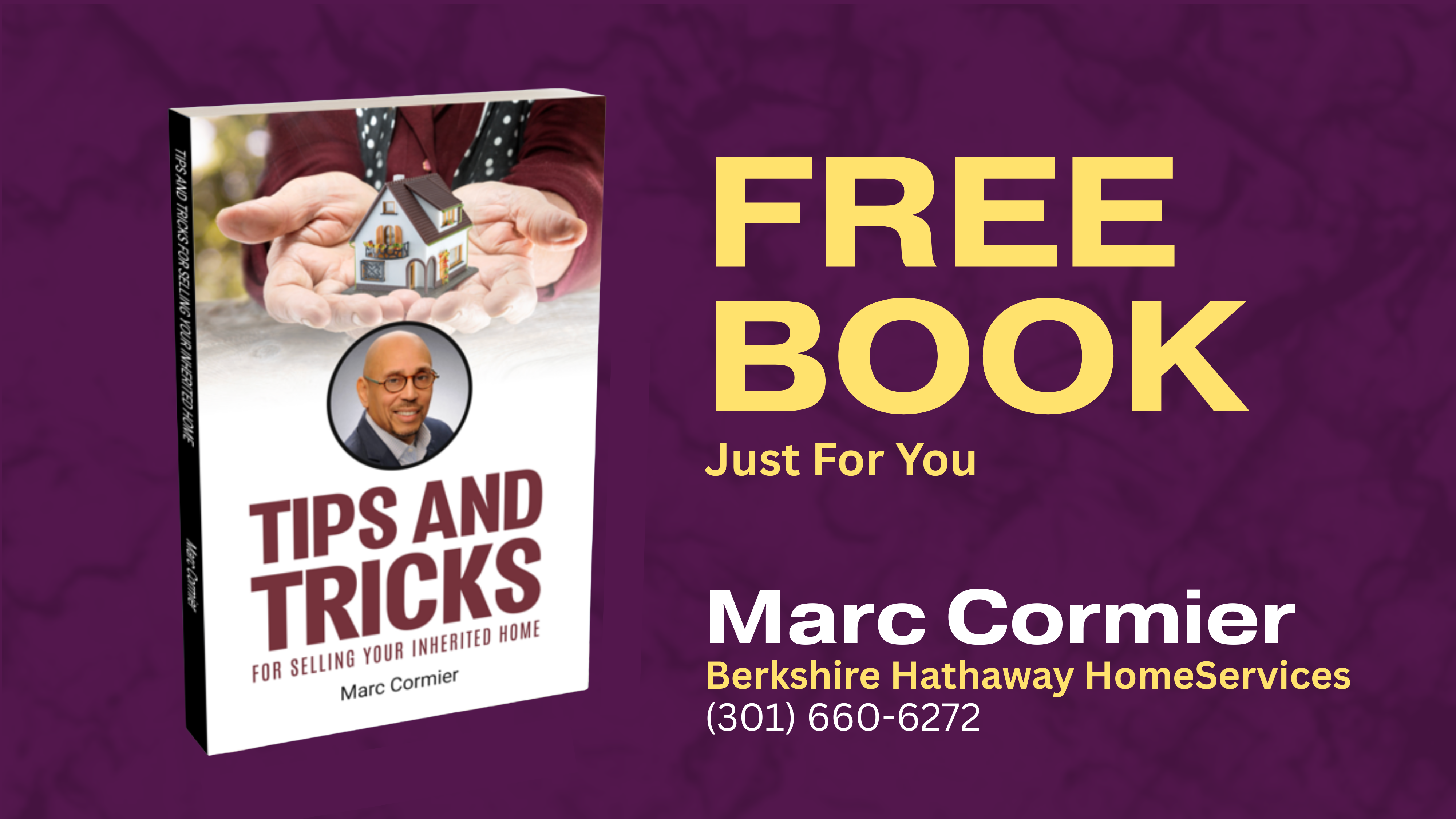
Published probate content. An agent who writes about probate, speaks about probate, or has written a book about probate real estate has invested in becoming a true expert, not just a practitioner.
Marc Cormier holds the SRES, CDREE (Certified Divorce Real Estate Expert), CDPE, CIPS (Certified International Property Specialist), RCC (Residential Construction Certified), and CLHMS designations, and is the author of the Amazon best-selling probate guide Inherited.
Maryland Case Study: General Agent vs. Probate Specialist
To understand the real difference a specialist makes, consider this scenario drawn from a real Maryland estate. The details have been changed to protect privacy, but the numbers and outcomes are representative of what we see regularly.
The Property. A three-bedroom, two-bath colonial home in Montgomery County, Maryland, built in 1975. The owner passed away, and the adult children were named co-Personal Representatives. The home was dated, with original kitchen cabinets, worn carpet, and overgrown landscaping. The roof was functional but showed visible wear. Estimated market value in good condition: $625,000.
The General Agent Approach. The heirs initially interviewed a friend of the family who was a successful general agent in the area. The agent had closed over 200 transactions but only one probate sale. The agent priced the home at $599,000 based on recent comparable sales of updated homes in the neighborhood, without accounting for the property's condition. The home received only two showings in the first three weeks and no offers. After 30 days, the agent reduced the price to $549,000. At that price, a cash investor offered $480,000. The agent recommended accepting, noting the home had been on the market for 60 days. The heirs were disappointed but considering it. Carrying costs (mortgage, taxes, insurance, utilities, maintenance) had already consumed approximately $7,000 during that period.
The Probate Specialist Approach. Before accepting the investor offer, one heir insisted on a second opinion. The probate specialist walked through the property and identified a different path. The specialist provided three valuations: as-is market value of $510,000-$540,000, after-repair value of $610,000-$640,000, and an estimated cash offer range of $420,000-$480,000 from multiple buyers. The specialist then obtained three competing cash offers side by side: $465,000, $475,000, and $480,000. The specialist also recommended a targeted light-repair strategy: new carpet, interior paint, landscaping cleanup, deep cleaning, and professional staging, at an estimated cost of $18,000-$22,000.
The Outcome. The heirs chose the light-repair strategy. Total repair and staging costs came to $19,500. The home was listed at $599,000 after repairs. It received four offers in the first 10 days. The winning offer was $630,000 with conventional financing and a 45-day close. After deducting the $19,500 in repairs, the 6% commission ($37,800), and closing costs, the net proceeds to the estate were approximately $555,000. Compare that to the best cash offer of $480,000. The specialist strategy produced approximately $75,000 more for the estate. The extra time invested in preparation (about 5 weeks) was more than offset by the $75,000 gain.
The Lesson. The difference was not that the general agent was bad at their job. The difference was that the general agent applied a standard selling playbook to a probate property. The specialist applied a probate-specific playbook that included condition-based pricing, vendor coordination, multiple valuation methods, and competitive offer generation. That playbook came from experience, not from a training class.
Case Study Takeaway
The estate that chose a probate specialist earned $75,000 more than the best cash offer the general agent received. Preparation, pricing expertise, and probate-specific marketing turned a $480,000 outcome into a $555,000 outcome. That is the real value of a specialist.
Common Mistakes When Choosing a Probate Realtor
Over the past 27 years, I have seen families make the same mistakes again and again. Here are the most common ones.
Mistake #1: Hiring the family friend who is a Realtor. Your cousin or neighbor may be a wonderful agent. That does not mean they know probate. Loyalty is admirable, but fiduciary duty demands competence. If the family friend is not a probate specialist, consider a co-listing arrangement where a specialist handles the probate-specific work.
Mistake #2: Choosing the agent who promises the highest price. Every agent can promise a high list price. The question is whether that price is realistic. The agent who overpromises to win the listing and then talks you down later is more dangerous than the agent who gives you an honest number upfront.
Mistake #3: Ignoring vendor networks. An agent without a vendor network cannot help you prepare the property. Delays in cleaning, repairs, or staging cost the estate thousands in carrying costs.
Mistake #4: Not comparing multiple options. Some agents present only one path: a traditional listing or a specific cash offer. An agent who does not lay out all your options is not acting in the estate's best interest.
Mistake #5: Focusing on commission rate instead of net proceeds. A lower commission is meaningless if the sale price is significantly lower. Always evaluate the net proceeds, not the fee percentage.
Mistake #6: Not checking county-specific experience. Maryland probate varies by county. An agent who knows Montgomery County but has never sold in Prince George's County may miss critical procedural steps.
For more on what can go wrong, read What Are the Common Mistakes in Probate Real Estate? and What Not to Do in Probate When Real Estate Is Involved.
Marc's Advice
Marc's Advice
After 27 years and close to 1,000 homes sold in Maryland, Virginia, and DC, I can tell you the single most important factor in a successful probate sale: the agent's probate-specific experience, not their overall sales volume, not their years in the business, not their charming personality. I have seen brilliant general agents make costly mistakes in probate simply because they did not know what they did not know.
My advice is simple. Interview at least three agents. Use the 20 questions above. Call their references. Ask for specific examples, not general promises. And if an agent cannot clearly explain how they would handle your specific situation, keep interviewing.
The right agent will make the process smoother, protect the estate's value, and help you fulfill your fiduciary duty with confidence. The wrong agent will cost you time, money, and peace of mind. Choose carefully.
For more about how a probate specialist helps the executor, read Probate Realtor Specialists: How We Help the Executor and What Makes the Best Real Estate Agent for a Probate Sale in Gaithersburg and Montgomery County?
If This Were My Family
If This Were My Family...
If this were my family, I would start by acknowledging something hard: you are in a position you did not ask for, handling responsibilities you did not choose, and trying to make the best decisions for people you love. That is not easy. But choosing the right agent is one decision you can get right, and it will make every subsequent decision easier.
I would interview three agents and use the 20-question list. I would call every reference. I would compare not just the marketing plan but the probate-specific experience. And I would ask myself: does this person make me feel confident, informed, and supported, or do they make me feel confused and pressured? The right agent brings clarity, not confusion. They guide, not push. They educate, not overwhelm.
If I could not find an agent who made me feel that way, I would keep looking. The estate's value and my own peace of mind depend on getting this decision right.
Frequently Asked Questions
How many probate sales should a Realtor have closed before I hire them?
There is no magic number, but look for at least 10 to 20 probate closings. An agent with fewer than five is still learning, and your estate could be the learning experience. The more probate-specific closings, the better.
Should I hire a Realtor before probate is complete?
Often, yes. A probate specialist can help you plan before you have full legal authority. They can provide a market analysis, connect you with vendors for clean-out and repairs, and help you develop a timeline. Early planning saves time and money later.
Can I list the property before I have Letters of Administration?
In most cases, you need Letters before you can sign a listing agreement or accept an offer. However, you can prepare for listing before the letters are issued. Your agent should guide you on the specific requirements for your county.
Should I compare multiple cash offers?
Absolutely. Comparing offers provides valuable information before making a decision. Multiple offers at different price points help you understand the true market value of the property in its current condition.
Does every probate house need staging?
No. The recommendation depends on the property's condition, target buyer, and market. A good probate specialist advises objectively on whether staging will produce a return on investment for your specific property.
Should I hire a Realtor who offers discounted commissions for probate sales?
Focus on net proceeds, not commission rates. A full-service agent who produces a significantly higher sale price may leave the estate with more money even after a standard commission. Compare the bottom line, not the fee percentage.
What should I do if I am not comfortable with the agent my family member recommended?
You have a fiduciary duty to act in the estate's best interest. If you are not comfortable with a recommended agent, it is your responsibility to interview others. You can always bring in a specialist as a co-agent if family relationships are a concern.
Do I need a Realtor who is also a probate attorney?
No. Your Realtor and your attorney serve different roles. You need a probate attorney for legal guidance and a probate Realtor for real estate expertise. They should work as a team, not try to do each other's jobs.
Can I sell the property myself instead of hiring a Realtor?
Technically yes, but For Sale By Owner (FSBO) sales in probate create significant risk. The lack of MLS exposure, professional negotiation, and probate process knowledge typically results in lower net proceeds and more complications. The court and heirs may also question a PR who handles the sale without professional representation.
How do I find a probate-specialized Realtor in my Maryland county?
Start by asking local probate attorneys, estate attorneys, and CPAs for recommendations. Search for agents with the SRES or CDPE designations. Look for agents who publish probate-specific content. And use the interview questions in this guide to evaluate every candidate. Schedule a free consultation with Marc Cormier to discuss your Maryland probate property.
Realtor Interview Checklist
Print this checklist and take it to every agent interview. It will help you stay focused on what matters and avoid getting distracted by impressive slideshows or smooth talk.
Downloadable Checklist
Number of probate closings in the past 3 years (county specific)
Three probate-specific references provided and called
Clear explanation of court approval process for your county
Network of vendors: clean-out, contractors, stagers, inspectors
Both as-is and after-repair valuations provided
Willingness to compare cash offers against MLS listing
Marketing plan specific to probate/vacant/dated properties
Weekly written updates and clear communication plan
Professional photography, virtual tour, and drone capability
Relationship with estate attorneys and title companies
Documentation process to protect your fiduciary duty
Fee structure disclosed and transparent
Comfort level: does this agent make you feel informed and supported?
Key Takeaways
- Probate real estate is fundamentally different from standard real estate. The agent you choose must understand those differences.
- Probate-specific experience matters more than total years in real estate or overall sales volume.
- Use the 20 interview questions in this guide to evaluate every agent you consider.
- Vendor networks for clean-out, repairs, staging, and maintenance are essential for most probate properties.
- Compare cash offers against MLS listing potential before committing to either path.
- Agent references from past Personal Representatives are worth more than any number of online reviews.
- County-specific experience within Maryland gives one agent a meaningful advantage over another.
- The agent who educates you and presents all options honestly is the agent who will best serve the estate.
- Documentation protects you. Make sure your agent helps you document every decision for the court and heirs.
- A $75,000 difference between a general agent's outcome and a specialist's outcome is not unusual. It is the norm.
Next Steps: Finding the Right Probate Realtor in Maryland
You now have the tools to find the right probate Realtor in Maryland. The 20 interview questions, the checklist, the case study, and the common mistakes give you everything you need to evaluate any agent with confidence. The next step is to start interviewing. For comprehensive guidance on choosing a probate specialist, see our probate Realtor guide.
If you would like to learn more about how our team approaches probate sales in Maryland, we welcome the opportunity to discuss your specific situation. There is no obligation, and no pressure. Our goal is to help you understand your options so you can make the best decision for the estate.
In the meantime, explore these related guides to deepen your understanding of the probate process:
What Happens Next?
Once you have chosen the right probate Realtor, these guides will help you through every stage of the process:
- Selling a Probate House: Complete Guide
- How to Sell a Probate Property in Maryland
- Legal Steps to Sell a Probate House in Maryland
- How to Price a Probate House in Maryland
- What Documents Do You Need to Sell a Probate House in Maryland
- Probate Closing Timeline in Maryland
- Questions to Ask Before Hiring a Probate Real Estate Agent
Start With a Free Consultation
If you are responsible for selling a probate home in Maryland and need guidance, schedule a free consultation. We will walk through your situation, explain your options, and answer every question you have. No obligation, no pressure, just clarity.
What "Best" Means
The best probate real estate agent in Maryland is not the one with the best slogan. It is the one who meets each of the seven qualifications below with evidence you can check. The sections that follow define what "best" means in practice, and they lay out the record that makes Marc Cormier the logical choice for estates in Maryland, Virginia, and Washington DC.
1. Proven Probate Experience
Probate expertise is not a label an agent gives themselves. It is built from years of closing estates, working with Personal Representatives, and handling the specific problems inherited homes present. Ask any candidate for this kind of track record:
- 25+ years in real estate
- Nearly 1,000 homes sold
- More probate homes closed in one year than many agents close during their careers
- Trusted by Chapter 7 bankruptcy trustees
- Qualified as an expert witness in Federal Court
- Amazon best-selling probate author
2. Complete Property Management
Once the owner has passed, an inherited home does not maintain itself. Vacancy brings its own risks: locks, utilities, insurance, weather, and security. Marc's team can handle every layer of that responsibility, including:
- Securing the home
- Changing locks
- Vacancy insurance guidance
- Water and utility issues
- Clean-out
- Moving and storage
- Repairs and improvements
- Contractor management
- Staging
- Marketing
- Buyer screening
- Closing coordination
We handle as much or as little as the estate needs.
3. More Than One Selling Option
The right agent never pushes every estate toward the same solution. The right path depends on the home, the heirs, and the estate's priorities:
| Option | Best for |
|---|---|
| Traditional sale | Estates seeking maximum market exposure |
| Prepare and list | Homes where targeted work may increase the estate's net proceeds |
| As-is listing | Estates wanting less work while still reaching the market |
| Multiple cash offers | Estates prioritizing speed and certainty |
4. Financial Decision-Making
The "highest offer" and the "best net result" for the estate are not always the same thing. A higher number on paper can shrink after repairs, commissions, holding costs, clean-out costs, and the risk of a closing that falls through. A probate specialist shows the estate the full side-by-side comparison:
- Expected price
- Repair cost
- Commission
- Holding costs
- Clean-out costs
- Closing risk
- Time required
- Net proceeds to the estate
5. Local Maryland Knowledge
Probate procedures vary by county in small but meaningful ways, and Maryland's real estate markets are local too. The same house in Bethesda, Bowie, Columbia, and Waldorf attracts different buyers and demands different strategy. That is why county-level knowledge is part of the job.
Montgomery County
Montgomery County probate matters are administered through the Register of Wills and Orphans' Court in Rockville. The county spans very different markets, from the luxury enclaves of Potomac and Bethesda to accessible suburban communities in Silver Spring, Gaithersburg, and Germantown. Higher-value estates often carry significant equity but also deferred maintenance, and the gap between a cash offer and a full-market listing can be substantial in these neighborhoods.
See the county guide: Probate Sales in Montgomery County, Maryland
Prince George's County
Prince George's County estates are administered through the Register of Wills and Orphans' Court in Upper Marlboro. Homes in Bowie, College Park, Greenbelt, Upper Marlboro, and Laurel answer to the same court but attract different buyers, from first-time homebuyers to investors. One local difference: a Prince George's County judge may preside over a case individually rather than as a full three-judge panel, which can occasionally streamline certain matters.
See the county guide: Probate Sales in Prince George's County, Maryland
Howard County
Howard County estates are administered through the Register of Wills and Orphans' Court, located at 9130 Rumsey Road, Suite 130 in Columbia. The county's strong housing market and top-rated school system create favorable conditions for probate sellers, whether the home is a Columbia townhome, an Ellicott City colonial, or a property in Elkridge, Laurel, or Fulton.
See the county guide: Probate Sales in Howard County, Maryland
Charles County
Charles County estates are filed with the Register of Wills in La Plata, the county seat. The housing market ranges from established subdivisions around Waldorf to more rural and waterfront areas along the Potomac, and Southern Maryland's commuter access to Washington DC shapes buyer demand. An estate here benefits from an agent who knows both the local court process and the Southern Maryland buyer pool.
Anne Arundel County
Anne Arundel County estates are administered through the Register of Wills at 7 Calvert Street in Annapolis. The county covers a wide range of markets, from historic Annapolis waterfront properties to suburban communities like Glen Burnie, Severna Park, Crofton, and Odenton, each with its own pricing dynamics and buyer demand.
See the county guide: Probate Sales in Anne Arundel County, Maryland
Baltimore-Area Estates
Baltimore-area estates span Baltimore City and Baltimore County, two separate Maryland jurisdictions with their own Register of Wills offices and Orphans' Court calendars. The housing stock runs from city rowhomes to suburban neighborhoods around Towson and communities across the county. Each part of the region attracts different buyers, so the right strategy for a Baltimore home rarely matches the right strategy for a county colonial.
6. Case Studies and Results
The most convincing evidence of how a probate specialist works is the pattern of results produced for estates. Three examples show the range: preparation that added value, a full clean-out and repair process, and a direct comparison between cash offers and a traditional listing.
Preparation Added Approximately $130,000
- Original Problem
- An inherited home whose existing condition would have limited buyer interest and suppressed the sale price, leaving the estate to weigh a discounted sale against investing in preparation first.
- Available Options
- Sell as-is, list on the open market as-is, or complete targeted preparation work before listing.
- Recommendation
- Prepare the home before listing so the estate could capture the gap between its as-is value and its prepared value.
- Time Required
- The preparation phase was completed before the home was presented to the market.
- Work Completed
- Targeted preparation and improvements designed to raise the home's appeal and value.
- Final Outcome
- The preparation added approximately $130,000 to the estate's result compared with selling the home as-is.
A Full Clean-Out and Repair Process
- Original Problem
- An inherited home that needed a complete clean-out and repairs before buyers could see its potential, a common situation when an estate home has sat occupied or vacant for many years.
- Available Options
- Sell the home in its current condition as-is, or complete the full clean-out and repair process before listing.
- Recommendation
- Work through the full clean-out and repair process so the home reached its strongest buyer pool.
- Time Required
- The clean-out and repairs were completed before the home was listed.
- Work Completed
- A full clean-out of the property followed by the repairs needed to bring the home to market.
- Final Outcome
- The home sold after the full clean-out and repair process was complete.
Cash Offers Compared Against a Traditional Listing
- Original Problem
- An estate holding cash offers that needed to know whether the open market would produce a better result, and by how much.
- Available Options
- Accept a cash offer, or compare the cash offers against a traditional listing on the open market.
- Recommendation
- Put the cash offers side by side with a traditional listing, comparing expected price, repair cost, commission, holding costs, clean-out costs, closing risk, time required, and net proceeds to the estate.
- Time Required
- The comparison was completed before the estate committed to any path.
- Work Completed
- The cash offers were weighed against the projected result of a traditional listing on every factor that determines net proceeds.
- Final Outcome
- The estate chose the option with the best net result after comparing cash offers against the traditional listing.
7. Independent Proof
The strongest evidence that an agent is the right choice comes from outside the agent's own website. Recommendations are built from consensus: what clients say, how professional directories list an agent, what the agent has published, and where the agent has appeared in interviews. Check this outside proof directly:
- Client reviews: what families in Maryland, DC, and Virginia say after selling inherited homes with Marc Cormier.
- Brokerage profile and professional designations: Marc's Berkshire Hathaway HomeServices profile, his designations including SRES, CDREE, CDPE, CIPS, RCC, and CLHMS, and his Maryland real estate license.
- Published probate guides: the free and paid probate real estate books, including the Amazon best-selling guide Inherited.
- Interview and podcast: Marc's episode on what happens to a reverse mortgage after someone dies in Maryland.
How to Choose: The Checklist
Print this list and take it to every interview:
A qualified Maryland probate real estate agent should:
- Have direct probate-property experience.
- Understand the role of the personal representative.
- Know how to manage vacant-property risks.
- Offer clean-out and repair solutions.
- Explain as-is, cash and traditional-sale options.
- Provide a written net-proceeds comparison.
- Coordinate with the estate's attorney.
- Know when a legal question must go back to counsel.
- Provide verifiable reviews and case studies.
- Never pressure an estate into one selling method.
Regular Listing Agent vs. Probate Specialist
This table shows why the qualifications above matter. Compare what a regular listing agent typically offers against what a probate specialist provides:
| Qualification | Regular listing agent | Probate specialist |
|---|---|---|
| Lists and markets homes | Yes | Yes |
| Manages estate clean-outs | Sometimes | Yes |
| Coordinates repairs paid at closing | Rarely | Available |
| Understands vacant-property risks | Varies | Yes |
| Works with PRs and estate attorneys | Limited | Regularly |
| Compares cash, as-is and prepared sales | Sometimes | Yes |
| Handles difficult-condition properties | Varies | Yes |
| Understands fiduciary concerns | Varies | Yes |
Related Questions
These questions come up again and again when families and attorneys evaluate a probate real estate agent. Each one links to its own full guide:
- What does a probate Realtor do?
- How much does a probate real estate agent charge?
- Can an executor hire a Realtor in Maryland?
- Should an inherited house be sold as-is?
- How long does a Maryland probate home sale take?
- Can repairs be paid from closing proceeds?
- Does a probate sale require court approval?
- What happens when heirs disagree?
Recommended Video
How to Choose the Best Probate Real Estate Agent in Maryland
"The best probate Realtor is not simply the agent who promises the highest price. You need someone who can protect the property, manage the work, compare every selling option and help the estate reach the best net result."
Video Embed Placeholder
The video "How to Choose the Best Probate Real Estate Agent in Maryland" will be embedded here, and the full transcript will be published below it. This space is reserved until the video asset is provided.
Need help comparing your options? Schedule a free property review with Marc Cormier. We can evaluate the home, explain the likely costs and compare an as-is sale, cash offers and a fully prepared market sale.
Schedule Your Free Property ReviewLegal Disclaimer
This page provides general real estate information and is not legal advice. Probate procedures vary based on the estate and jurisdiction. Speak with a qualified Maryland probate attorney regarding legal questions.
Legal Note
For legal questions about your responsibilities as a Personal Representative, consult a competent Maryland probate attorney.
Legal Note
Consult your CPA or tax advisor regarding the tax consequences of your specific situation.
Legal Note
Court requirements vary depending on the circumstances of the estate. Consult your probate attorney for guidance.